Does Temperature Affect RO Membranes?
In the field of water treatment, RO (Reverse Osmosis) membranes play a vital role in ensuring water purity across municipal systems, industrial processes, and household filtration. However, their performance and lifespan are greatly influenced by temperature fluctuations. Understanding these effects and taking proactive steps to minimize adverse impacts is essential for maintaining optimal membrane efficiency and durability.
How Temperature Impacts RO Performance
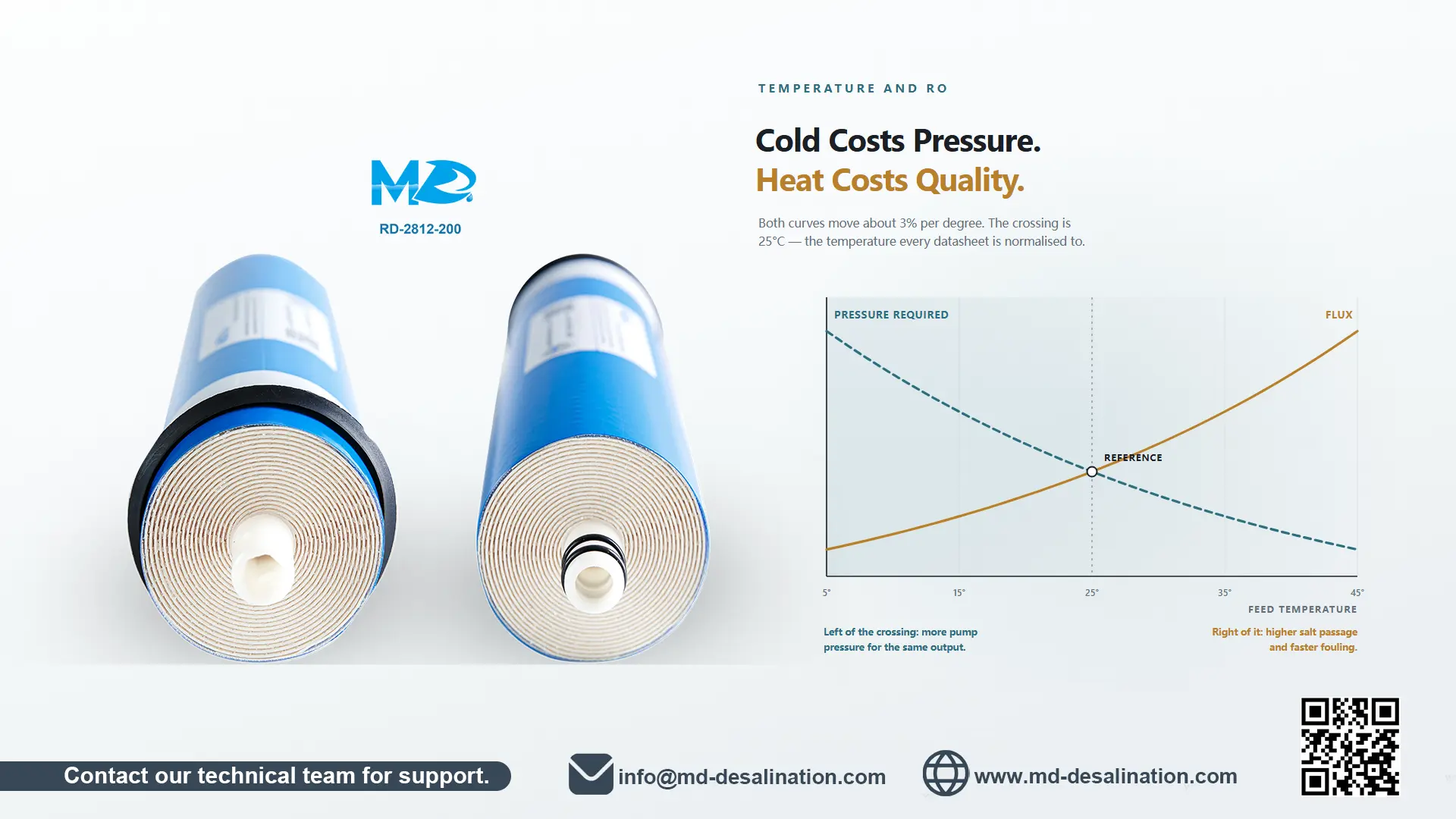
Temperature exerts a direct influence on water viscosity and the diffusion rates of dissolved solutes, critically impacting the permeability and rejection characteristics of RO membranes.
· Lower Temperatures: Cold water typically elevates water viscosity, which diminishes permeate flow rates. This necessitates higher operational pressures to sustain production levels, increasing energy consumption.
· Higher Temperatures: Elevated temperatures accelerate solute diffusion rates and increase permeability. While this improves flow rates, it can also compromise the membrane's rejection capability, allowing more salts to pass through. Additionally, higher temperatures can accelerate fouling, scaling, or structural damage within the membrane over time.
Strategies to Optimize Membrane Performance
To optimize RO membrane performance across a range of temperatures, several effective strategies can be implemented:
1. Temperature Control: Meticulous monitoring and precise control of feed water temperature are imperative. Keeping the temperature stable within the recommended range (usually between 15–35°C or 59–95°F) is crucial for stabilizing performance.
2. Thermal-Resistant Components: Selecting membrane housings and components made from temperature-resistant materials enhances durability and resilience against thermal stresses.
3. Adapted Cleaning Protocols: Scheduled cleaning using appropriate chemicals tailored to temperature conditions effectively prevents fouling and scaling. Higher temperatures can boost the solubility of cleaning solutions, but care must be taken not to exceed the membrane's temperature tolerance.
4. Robust Pre-filtration: Incorporating pre-filtration systems equipped with temperature-specific capabilities ensures operational consistency and minimizes maintenance needs.
Frequently Asked Questions
Q1: What is the impact of temperature on RO membrane performance?
A: Higher temperatures generally increase membrane permeability and flow rates, but may decrease the rejection capability for contaminants. Conversely, lower temperatures increase water viscosity, leading to reduced flow rates and the need for higher operating pressures.
Q2: How do temperature fluctuations affect RO membrane lifespan?
A: Temperature fluctuations impose significant stress on RO membranes. Elevated temperatures may soften membrane materials, increasing susceptibility to fouling, whereas lower temperatures can induce brittleness and cracking. Ensuring a stable operational temperature is paramount for extending lifespan.
Q3: What are the recommended operating temperatures for RO membranes?
A: Most RO membranes are engineered to function efficiently within a temperature range spanning from 45°F to 113°F (7°C to 45°C). Deviating from this range can significantly impair both performance and longevity.
Q4: Can temperature affect the cleaning process of RO membranes?
A: Yes. Elevated temperatures can boost the solubility of cleaning solutions and accelerate reaction rates. However, excessively high temperatures can damage membrane materials, so cleaning procedures must align with the membrane's temperature tolerance.
Conclusion
Understanding the influence of temperature on RO membranes is essential for water treatment professionals. Temperature variations can profoundly impact membrane performance, lifespan, and maintenance effectiveness. By monitoring temperature fluctuations closely and maintaining membranes within their recommended range, operators can optimize RO system performance, extend membrane lifespan, and uphold consistent water treatment quality.
Looking for high-quality RO membranes?
Xi'an Membrane Desalination International Co., Ltd. is a leading manufacturer and supplier of RO membranes, with robust inventory, comprehensive certifications, fast delivery, and secure packaging. We specialize in providing both OEM and ODM services to meet your specific application needs. Contact us at info@md-desalination.com for expert guidance or to request free samples.
References
1. FilmTec™. Factors Affecting RO Membrane Performance.
2. Water Treatment Guide. Factors Affecting Performance.
3. Water Quality Association. Reverse Osmosis (RO) Fact Sheet.