is reverse osmosis water safe to drink?
Is Reverse Osmosis Water Safe to Drink?
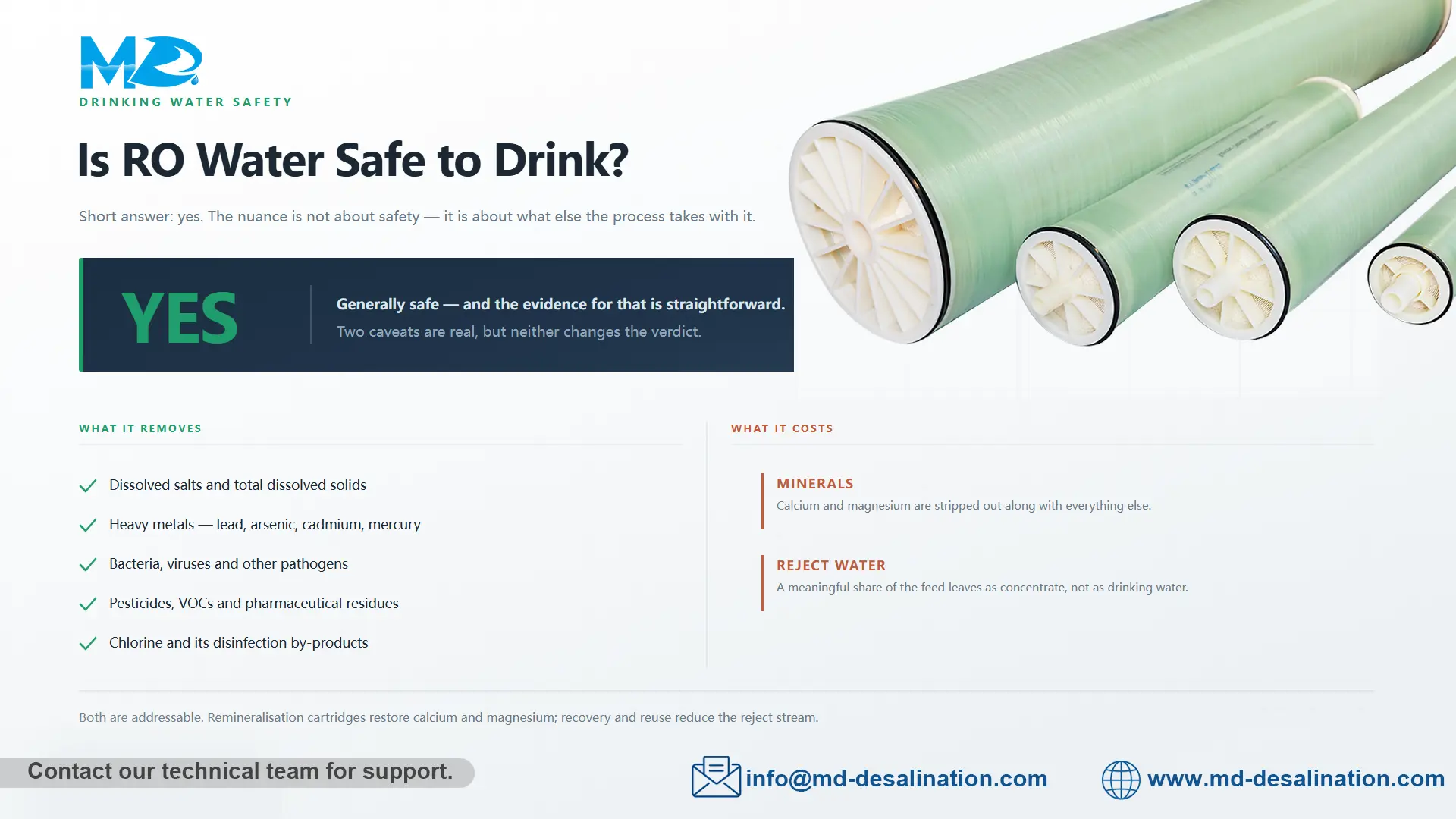
Yes, reverse osmosis (RO) water is generally considered safe to drink and is widely used as a method of purifying drinking water. RO systems effectively remove a wide range of contaminants from water, including dissolved solids, salts, minerals, heavy metals, bacteria, viruses, and other impurities, producing high-quality, filtered water.
· Contaminant Removal: RO membranes have extremely small pores that allow only water molecules to pass through while blocking dissolved contaminants and particles. This process effectively removes impurities from the water, ensuring that it meets or exceeds regulatory standards for drinking water quality.
· Microbiological Safety: RO systems are capable of removing bacteria, viruses, and other microorganisms from water due to the small pore size of the membrane. This helps ensure that the purified water is microbiologically safe for drinking.
· Consistency and Quality: RO systems provide consistent and dependable water quality, meeting or exceeding regulatory standards for drinking water. The filtration process removes potential health hazards, ensuring that the water is safe and suitable for consumption.
· Taste and Odor: RO systems typically improve the taste and odor of water by removing chlorine, organic compounds, and other substances that can affect the sensory properties of the water. This makes RO water more pleasant to drink and encourages hydration.
· Customization and Control: RO systems can be customized and controlled to meet specific water quality requirements, allowing for adjustments in remineralization, pH balance, and taste enhancement to suit individual preferences.
While reverse osmosis water is generally safe to drink, it is essential to ensure that the RO system is properly maintained, including regular filter replacements and system upkeep, to maintain water quality and system performance. Moreover, it is important to monitor water quality periodically and address any issues that may arise to ensure continued safety and reliability of the drinking water supply.
Introduction
Reverse osmosis (RO) water has gained popularity as a drinking water choice in recent years due to its demonstrated purity and removal of contaminants. As a consumer, it is natural to question whether this water purification method is truly safe for consumption.
Understanding Reverse Osmosis
Reverse osmosis is a water purification process that utilizes a semipermeable membrane to remove particles, molecules, and larger ions from drinking water. This process works by applying pressure to the water, forcing it through the membrane, which permits only pure water molecules to pass through, leaving behind contaminants. The result is water that is essentially purer than the original source.
Effectiveness in Removing Impurities
One of the primary reasons for the widespread use of reverse osmosis systems is their effectiveness in removing various impurities from water. RO systems can effectively filter out common contaminants such as chlorine, fluoride, lead, arsenic, and dissolved solids. This purification process can lead to water that is free from many potentially harmful substances, making it a desirable option for drinking water.
Reverse osmosis (RO) is highly effective in removing a wide range of impurities and contaminants from water.
· Dissolved Solids and Minerals: RO membranes have extremely small pores that can effectively remove dissolved solids and minerals from water, including salts, heavy metals (such as lead, arsenic, cadmium, and mercury), and various other inorganic compounds. This results in purified water with significantly reduced levels of total dissolved solids (TDS).
· Microorganisms: The small pore size of RO membranes also enables them to block bacteria, viruses, and other microorganisms from passing through, effectively removing these pathogens from the water and making it microbiologically safe for drinking.
· Organic Compounds: RO membranes are capable of removing many organic compounds from water, including pesticides, herbicides, volatile organic compounds (VOCs), pharmaceuticals, and industrial chemicals. These contaminants are typically too large to pass through the membrane pores and are effectively removed during the filtration process.
· Chlorine and Odor: RO systems often include pre-filters with activated carbon, which can effectively remove chlorine, chloramines, and other chemicals that affect taste and odor. This improves the overall quality and palatability of the purified water.
· Sediment and Particulate Matter: RO systems typically include sediment pre-filters, which remove larger particles, sediment, and debris from the water before it reaches the RO membrane. This helps protect the membrane from fouling and ensures efficient operation.
Overall, reverse osmosis is one of the most effective methods for producing high-quality, purified drinking water by removing a wide range of impurities and contaminants. However, it is important to note that while RO is highly efficient, no water treatment process is perfect, and some contaminants may still be present in the treated water depending on the specific system design and operating conditions. Regular maintenance and monitoring of RO systems are essential to ensure consistent performance and water quality.
Potential Drawbacks of Reverse Osmosis
While reverse osmosis is highly effective in removing impurities, it is not without its drawbacks. One significant downside is that RO systems can also remove beneficial minerals present in water, such as calcium and magnesium. These minerals are essential for maintaining good health, and their absence in drinking water purified through reverse osmosis may necessitate obtaining them through other dietary sources.
Another consideration is the amount of water wastage associated with reverse osmosis systems. These systems typically produce a significant amount of wastewater for every gallon of purified water produced, which can be a concern in areas where water conservation is paramount.
Safety of Drinking Reverse Osmosis Water
Despite the potential drawbacks, reverse osmosis water is generally considered safe for consumption. The purification process effectively removes harmful contaminants, ensuring that the water meets stringent safety standards set by regulatory bodies.
However, it is essential to note that while reverse osmosis removes many impurities, it may not eliminate all contaminants present in the water. Regular maintenance and monitoring of RO systems are necessary to ensure optimal performance and water quality.
Furthermore, the removal of beneficial minerals by reverse osmosis may raise concerns about the impact on health. However, research on the health effects of consuming demineralized water is inconclusive, with some studies suggesting potential adverse effects on mineral intake and others finding no significant health risks.
It is worth noting that some concerns have been raised regarding the potential removal of beneficial minerals from water during the RO process. However, research suggests that the contribution of minerals from drinking water to overall dietary intake is minimal, and a well-balanced diet provides an ample supply of essential minerals. Additionally, remineralization options are available to restore minerals to RO water if desired.
Conclusion
In conclusion, reverse osmosis water is generally safe for drinking purposes, as it effectively removes harmful contaminants from the water. However, it is essential to weigh the potential drawbacks, such as the removal of beneficial minerals and water wastage, against the benefits of purified water.
As with any drinking water option, it is crucial to consider individual needs and preferences when deciding whether reverse osmosis water is the right choice. Regular maintenance and monitoring of RO systems are essential to ensure continued effectiveness and water quality.
Have questions about your specific water purification needs?
At Xi'an Membrane Desalination International Co., Ltd., we provide tailored membrane solutions for diverse applications. Whether you are selecting the right RO membrane or optimizing your filtration system, our technical team is here to help. Contact us at info@md-desalination.com to discuss your project or request free samples.
References
1. American Water Works Association. https://www.awwa.org/
2. U.S. Environmental Protection Agency. https://www.epa.gov/
3. National Institute of Environmental Health Sciences. https://www.niehs.nih.gov/
4. World Health Organization. https://www.who.int/