What Are RO Membranes Made Of?
Reverse osmosis (RO) membranes play a pivotal role in water purification, ensuring the availability of clean and safe drinking water. They are integral to both residential and industrial water treatment systems and are essential for maintaining rigorous water quality standards across diverse applications. These membranes effectively filter contaminants, providing purification that supports health and safety in communities and industries alike.
RO membranes typically consist of thin, semipermeable layers designed to selectively allow water molecules to pass through while filtering out contaminants such as salts, minerals, and other impurities. This selective permeability is made possible by the specific material properties of the membrane, which commonly include polymers such as polyamide or cellulose acetate. These materials are selected for their robustness, fouling resistance, and ability to withstand the demanding conditions encountered in water treatment processes.
The effectiveness of RO membranes in removing contaminants underscores their critical role in maintaining drinking water purity. Whether used in homes or industrial settings, RO technology is essential in contemporary water purification, ensuring that communities worldwide consistently have access to safe drinking water. It reliably removes impurities and enhances the quality of drinking water supplies across different regions and environments.
Understanding the composition and functional principles of RO membranes provides a deeper appreciation of their role in safeguarding public health and environmental sustainability. These membranes not only improve water quality but also contribute to efficient resource management and the preservation of natural ecosystems. As membrane technology advances, the potential for improving water purification processes and expanding access to clean water continues to grow on a global scale.
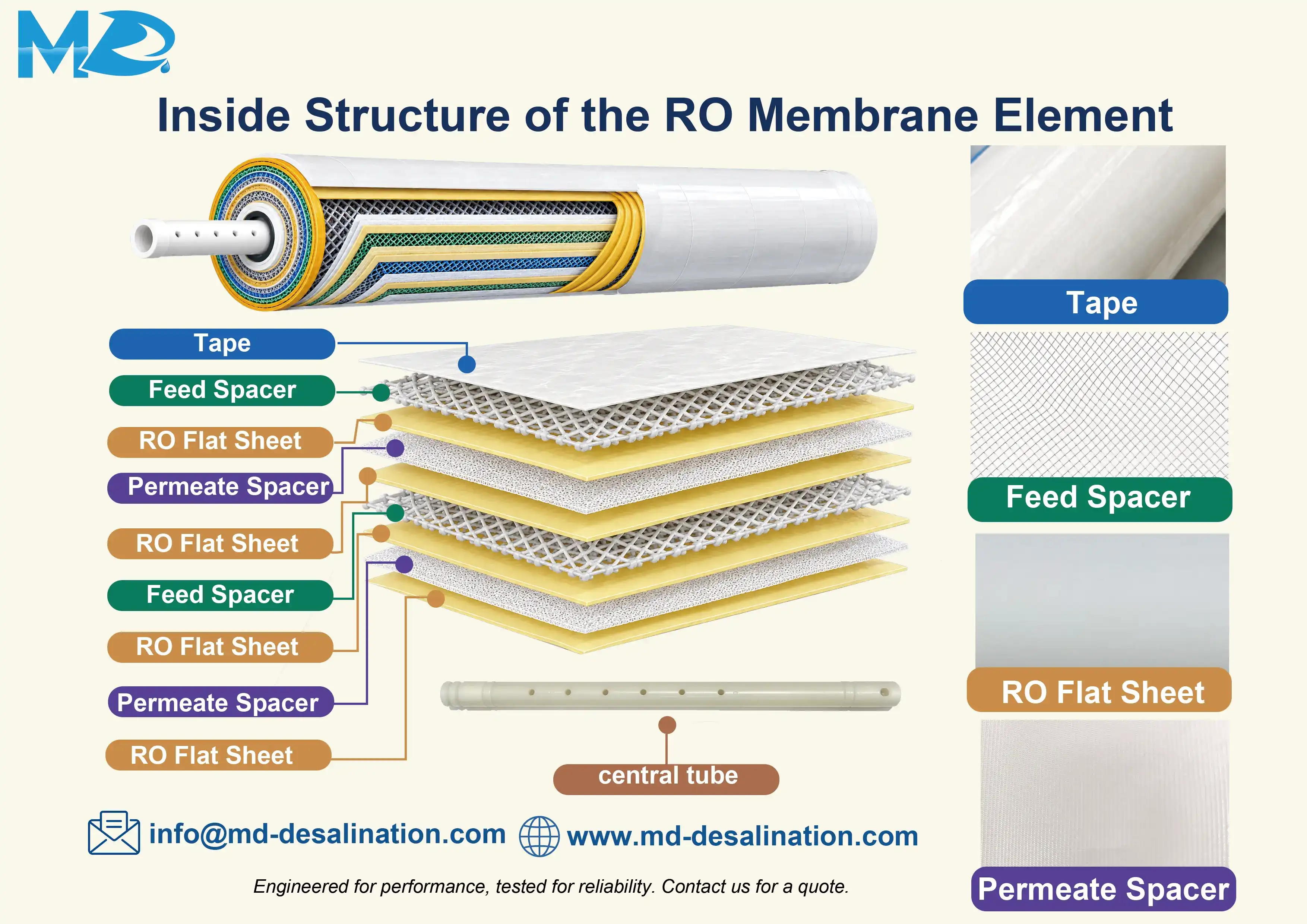
What Makes RO Membranes Different from Other Types of Filters?
RO membranes purify water by filtering contaminants at a molecular level, surpassing the capabilities of filters that target only larger particles. These membranes use thin-film composite layers to effectively remove ions, bacteria, and viruses, achieving a level of purification unmatched by conventional filtration methods. This ensures that water treated with RO membranes meets stringent quality standards, making it suitable for applications where purity and safety are paramount.
How Long Do RO Membranes Typically Last?
The lifespan of an RO membrane varies depending on factors such as water quality and frequency of use, typically ranging from 2 to 5 years. Regular maintenance routines and effective prefiltration systems can significantly prolong membrane durability and efficiency. By monitoring and optimizing these factors, users can ensure peak performance and reliable water purification over an extended period.
Are RO Membranes Recyclable?
RO membranes generally are not recyclable through conventional methods. However, manufacturers often provide disposal and recycling programs for used membranes. For specific instructions on responsible recycling or disposal, consult the manufacturer directly. This ensures that membranes are handled in an environmentally sound manner, consistent with sustainable practices in the water treatment industry.
How Do I Know If I Need a New RO Membrane?
Signs indicating that an RO membrane requires replacement include a noticeable decrease in water pressure, extended filtration times, and a perceptible decline in water quality, such as increased contaminants or altered taste. Routine maintenance checks are essential for promptly identifying these indicators and determining when replacement is necessary. Addressing these signs promptly ensures continuous efficient operation and consistent delivery of high-quality purified water.
Conclusion
RO membranes play a crucial role in water purification by utilizing advanced materials such as polyamide and polysulfone to effectively filter contaminants and ensure the provision of clean, safe drinking water. Understanding their composition underscores their essential function across various applications. Whether deployed in homes or industries, choosing the right RO membrane is pivotal for achieving efficient filtration and meeting stringent water quality standards. Tailoring membrane selection to specific requirements enables the removal of impurities while retaining essential minerals, enhancing both water safety and taste. This emphasis on membrane selection highlights its role in promoting sustainable water treatment practices, healthier environments, and improved public health outcomes globally. By investing in quality RO membranes, users contribute to sustainable water management and reliable access to high-quality drinking water.
Xi’an Membrane Desalination International Co., Ltd. is a distinguished manufacturer and supplier specializing in RO membranes, offering a wide inventory, comprehensive certifications, prompt delivery, and rigorous packaging standards. We provide extensive testing support, as well as OEM and ODM services to meet diverse client requirements. Whether you need membranes for residential, commercial, or industrial applications, our expertise ensures top-quality products tailored to your specifications. For inquiries or to request samples for selecting the ideal RO membrane, please contact us at info@md-desalination.com. Our team is committed to delivering reliable solutions that enhance water purification efficiency and performance across various sectors.
References
-
"Reverse Osmosis Membrane Technology: Applications for High Purity Water Production." Journal of Membrane Science, vol. 126, no. 1-2, 1997, pp. 1-33.
-
"Polyamide Thin-Film Composite Membranes: The Role of Interfacial Polymerization and Monomer Selection on Desalination Performance." Water Research, vol. 43, no. 1, 2009, pp. 153-162.
-
"Life Cycle Assessment of Reverse Osmosis Membranes for Water Treatment." Environmental Science & Technology, vol. 46, no. 5, 2012, pp. 2635-2643.
-
"The Impact of Fouling and Cleaning on the Performance of Reverse Osmosis Membranes." Desalination, vol. 197, no. 1-3, 2006, pp. 267-276.