What are the advantages of the RO membrane?
What Are the Advantages of the RO Membrane?
Introduction
As a key component in water purification systems, Reverse Osmosis (RO) membranes play a significant role in helping ensure access to clean and safe drinking water. Their effectiveness lies in their ability to filter out contaminants and impurities, leaving behind pure, potable water.
Understanding Reverse Osmosis
Reverse osmosis is a water purification process that uses a semi-permeable membrane to remove particles, molecules, and larger ions from water. By applying pressure to the feed water, the process forces water through the RO membrane, leaving contaminants behind while allowing purified water to pass through. This method effectively removes impurities such as bacteria, viruses, dissolved solids, and heavy metals, resulting in clean and safe drinking water.
Advantages of RO Membranes
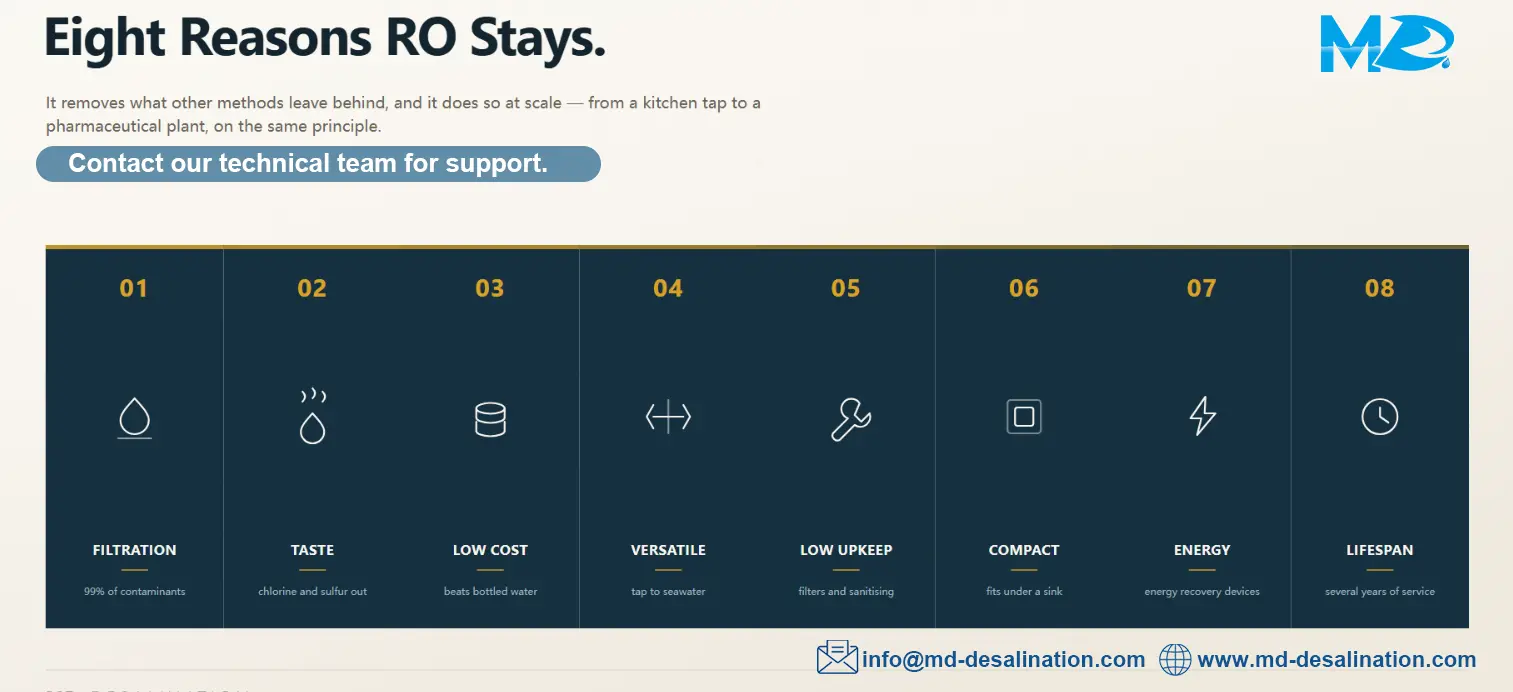
Superior Filtration: One of the primary advantages of RO membranes is their exceptional filtration capability. These membranes can effectively remove up to 99% of contaminants present in water, including bacteria, viruses, pesticides, and chemicals. This ensures that the water produced is of high quality and safe for consumption, giving users peace of mind regarding the purity of their water supply.
Improved Taste and Odor: RO membranes not only remove harmful substances but also improve the taste and odor of water. By eliminating impurities that contribute to unpleasant tastes and odors, such as chlorine and sulfur compounds, RO systems provide water that is not only safe but also refreshing and pleasant to drink. This makes it more appealing for consumption, encouraging people to increase their water intake and stay hydrated.
Cost-Effective: While the initial investment in an RO system may appear significant, it proves cost-effective in the long run. With proper maintenance and regular filter replacements, RO membranes can last for several years, providing a reliable source of clean water at a fraction of the cost of bottled water or alternative purification methods. This makes them a viable choice for both residential and commercial applications, saving customers money on water costs over time.
Versatility and Scalability: RO membranes are versatile and can be used in a range of settings, from households to industrial facilities. They are capable of treating diverse water sources, including tap water, brackish water, and seawater, making them suitable for a variety of applications. Whether improving drinking water quality at home, purifying water for irrigation in agriculture, or producing ultrapure water for pharmaceutical manufacturing, RO membranes offer a flexible solution. RO systems are also highly scalable and can be easily expanded or modified to accommodate changing water demand, production requirements, or varying feed water conditions.
Minimal Maintenance: Maintaining an RO system is relatively straightforward and requires minimal ongoing upkeep. Routine tasks such as replacing filters and sanitizing the system help ensure optimal performance and lifespan. Compared with other water treatment methods that may involve complex procedures and frequent servicing, RO membranes are easy to manage, providing convenience without compromising water quality.
Effective Removal of Contaminants: RO membranes effectively remove a wide range of contaminants from water, including dissolved solids, bacteria, viruses, organic compounds, and heavy metals. This results in high-quality filtered water suitable for various applications, including drinking, cooking, and industrial processes.
Compact Design: RO systems typically have a compact design, making them suitable for installation in a variety of settings, including homes, offices, commercial buildings, and mobile units.
Energy Efficiency: Although RO is inherently energy-intensive, modern RO systems incorporate energy-efficient components and advanced control systems to minimize energy consumption. In addition, developments such as energy recovery devices help reduce operating costs and improve overall efficiency.RO technology can contribute to sustainable water management by providing a dependable source of clean water from diverse feed sources, including brackish water, seawater, and wastewater. This can help reduce water scarcity, decrease dependence on freshwater resources, and support environmental conservation efforts.
Long Lifespan: With proper maintenance and care, RO membranes can have a relatively long lifespan, lasting several years before requiring replacement. This longevity ensures consistent performance and dependable water filtration over time.
Conclusion
In conclusion, the advantages of RO membranes are significant, making them an indispensable tool in water purification systems. From superior filtration and improved taste to environmental sustainability and cost-effectiveness, RO membranes offer a multitude of benefits for individuals, communities, and industries alike. By harnessing the power of reverse osmosis, we can continue to help ensure access to clean and safe drinking water for generations to come.
References
1. Water Online. "The Benefits of Reverse Osmosis in Water Treatment." https://www.wateronline.com/doc/the-benefits-of-reverse-osmosis-in-water-treatment-0001.
2. US Water Systems. "8 Benefits of Using a Reverse Osmosis System." https://www.uswatersystems.com/blog/2017/06/8-benefits-of-using-a-reverse-osmosis-system/.
3. National Center for Biotechnology Information. "Reverse Osmosis Membrane Technology." https://www.ncbi.nlm.nih.gov/pmc/articles/PMC4068920/.