What Are the Elements of an RO Membrane?
Reverse osmosis (RO) technology is a cornerstone of water purification, and the RO membrane is its central component. Understanding the membrane's structure is essential to grasping how this widely adopted filtration method works.
At its core, an RO membrane is engineered to allow water molecules to pass through while blocking dissolved salts, minerals, and other contaminants. It is typically composed of a semipermeable material—such as thin-film composite (TFC) or cellulose acetate—and consists of multiple layers designed to withstand high pressure and facilitate selective permeation.
The composition typically includes a thin, dense barrier layer that serves as the primary filtration barrier, supported by a porous substructure that provides mechanical strength and facilitates fluid flow. Membrane effectiveness depends on maintaining the balance between permeability and selectivity.
Functionally, the membrane operates on the principle of osmotic pressure differential. When pressurized feed water is applied to one side of the membrane, water molecules pass through the membrane's microscopic pores driven by the pressure differential, while contaminants are retained. This separates impurities from the purified water stream, producing clean water for applications ranging from drinking water purification to industrial processes.
RO membranes are designed to operate efficiently within specific temperature and pressure ranges. Temperature affects viscosity and solute diffusion rates, which in turn influence membrane performance. Proper maintenance—including periodic cleaning and monitoring of operating conditions—is essential for prolonging membrane lifespan and ensuring consistent water quality.
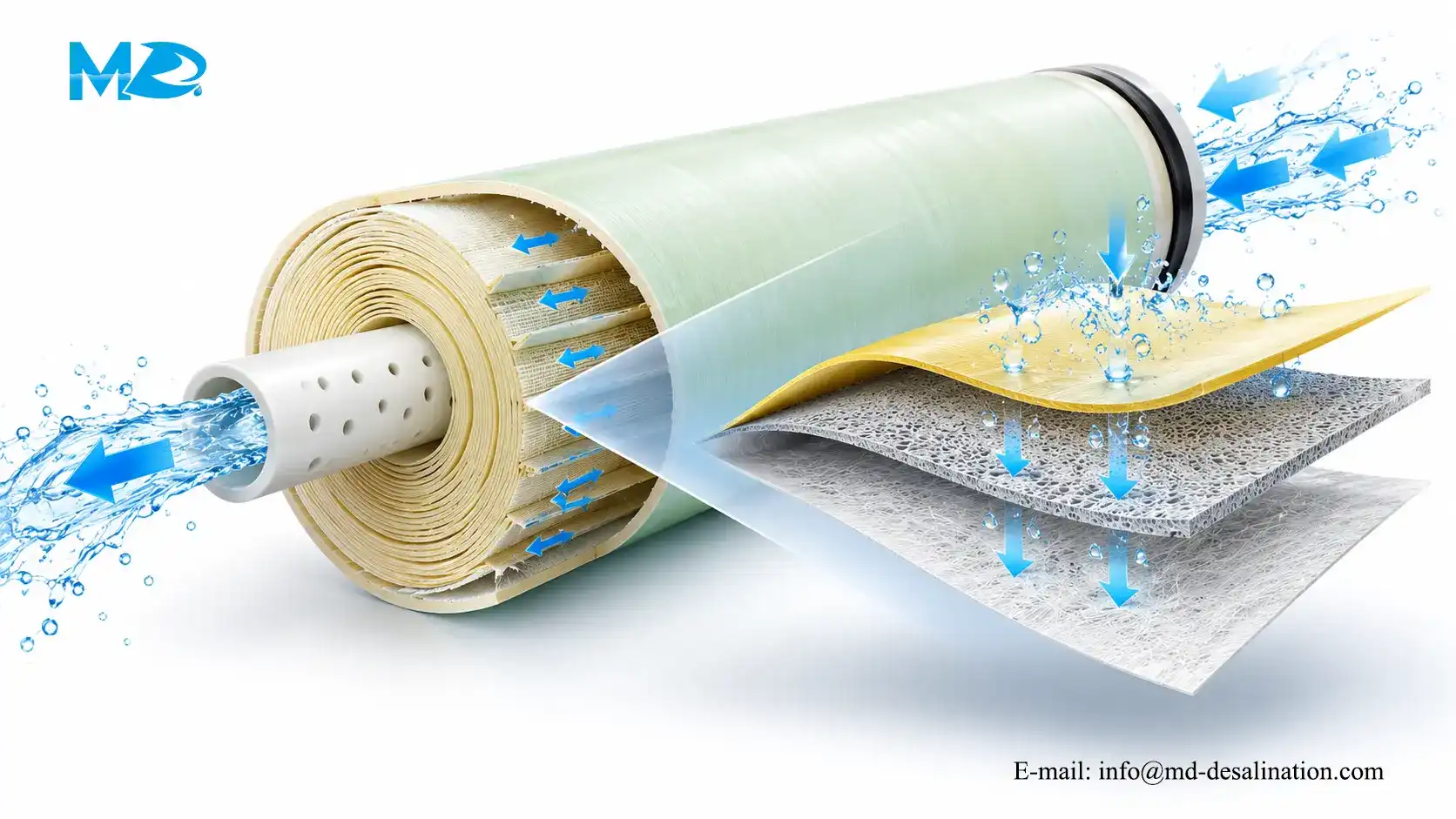
Key Elements of an RO Membrane
An RO membrane consists of several critical elements, each contributing to its performance.
Polyamide Thin-Film Composite (TFC): TFC membranes are widely used in RO technology due to their effective filtration capabilities. They consist of a polyamide layer that acts as the primary filtration barrier, selectively allowing water molecules to pass while blocking contaminants. This thin layer is essential for achieving high purity in the permeate. TFC membranes also feature a porous support layer that provides mechanical strength, enabling the membrane to withstand filtration pressures without compromising integrity.
Support Layers: Below the polyamide layer, TFC membranes typically incorporate additional layers, including a microfiltration layer and a spacer layer. The microfiltration layer contributes to membrane robustness and longevity through structural support. The spacer layer creates pathways for water flow, optimizing filtration efficiency and contaminant removal.
Protective Coating: To improve resilience and extend operational life, RO membranes frequently undergo a protective coating process. This outer layer serves as a barrier against physical damage and fouling caused by waterborne contaminants, helping sustain efficiency and maintain filtration performance over time.
Membrane Housing: The membrane is housed within a cylindrical casing essential for maintaining precise pressure and flow dynamics during filtration. Typically crafted from robust materials such as fiberglass or durable plastics, the housing ensures structural integrity under operating pressures. Its design protects the membrane and facilitates efficient water flow through the filtration channels, contributing to consistent and reliable performance.
FAQ
Q: What is the lifespan of an RO membrane?
A: The lifespan varies depending on water quality, usage, and maintenance. On average, RO membranes last between 2 and 5 years. Regular maintenance and feed water pretreatment can help extend membrane lifespan.
Q: How do I know if my RO membrane needs replacement?
A: Signs include a noticeable decrease in water flow, increased water waste, and declining water quality. If these issues occur, inspect the membrane and replace it if necessary.
Q: Can I clean an RO membrane?
A: Yes, membranes can be cleaned to remove certain types of fouling. Cleaning should be performed carefully to avoid damaging the membrane. Follow the manufacturer's recommendations or consult a professional.
Q: Are all RO membranes the same?
A: No. RO membranes come in different types and specifications depending on application. Pore size, material, and chemical resistance vary between membranes. Select a membrane suited to your specific requirements.
Conclusion
Understanding the components of an RO membrane is essential for optimizing water purification. The polyamide thin-film composite layer is the defining element, selectively permitting water molecules to pass while rejecting contaminants and thereby ensuring high permeability and superior contaminant removal.
Beyond the TFC layer, protective coatings enhance membrane durability and longevity by acting as barriers against fouling, scaling, and chemical damage. Selecting the right membrane for specific water quality and operating parameters is crucial for consistent, reliable purification outcomes.
The cylindrical housing—typically fiberglass or durable plastic—maintains optimal pressure and flow conditions within the filtration system, protecting the membrane and facilitating efficient water flow through the membrane channels.
Xi'an Membrane Desalination International Co., LTD. is a leading manufacturer and supplier of RO membranes, with a comprehensive inventory and adherence to rigorous quality standards. We ensure prompt delivery and robust packaging so that membranes reach customers in optimal condition. Our expertise extends to customized solutions through OEM and ODM services, catering to specific project requirements.
For more information on our products and services, including technical specifications and procurement assistance, contact us at info@md-desalination.com. We are dedicated to supporting your water purification initiatives with membrane solutions tailored to industrial, commercial, and residential needs.
References
1."Reverse Osmosis: Theory and Practice." Water Quality Association.
2.Baker, Richard W. Membrane Technology and Applications.
3.Bhattacharya, Sourabh, and Tushar K. Ghosh. Fundamentals of Membrane Technology.