What is flat sheet membrane?
What Is a Flat Sheet Membrane?
Flat sheet membrane technology is a significant advancement in filtration processes, revolutionizing industries ranging from water treatment to biomedical applications. These membranes offer exceptional efficiency and flexibility, making them vital in various sectors.
A flat sheet membrane is a type of membrane used in various filtration and separation processes, including reverse osmosis (RO), ultrafiltration (UF), microfiltration (MF), and nanofiltration (NF). As the name suggests, flat sheet membranes have a flat, planar geometry and are typically thin and flexible.
· Construction: Flat sheet membranes are typically constructed by casting or extruding a thin layer of membrane material onto a backing fabric, such as a nonwoven texture or porous substrate. The membrane material can vary depending on the application and desired separation properties.
· Material: Flat sheet membranes can be made from various materials, including polymers such as polyamide, polysulfone, polyethersulfone, polyvinylidene fluoride (PVDF), cellulose acetate, and others. The choice of membrane material depends on factors such as the targeted separation process, operating conditions, and compatibility with the feed solution.
· Pore Size: The pore size of flat sheet membranes can vary depending on the application and separation requirements. For example, in RO membranes, the pore size is extremely small to allow only water molecules to pass through while rejecting dissolved salts and other contaminants. In contrast, in UF and MF membranes, the pore size is larger to permit the passage of larger molecules, such as proteins, colloids, and suspended particles, while retaining smaller solutes.
· Applications: Flat sheet membranes are used in a wide range of applications, including water and wastewater treatment, desalination, food and beverage processing, pharmaceutical and biotechnology processes, and industrial separations. They are versatile and can be customized to meet specific filtration and separation needs.
· Module Arrangement: Flat sheet membranes can be used in different module configurations, including spiral-wound modules, flat sheet modules, tubular modules, and hollow fiber modules. Each arrangement offers advantages and limitations depending on factors such as surface area, packing density, flow distribution, and ease of cleaning and maintenance.
Overall, flat sheet membranes are essential components in numerous filtration and separation processes, providing efficient and selective separation of solutes based on size, charge, or other properties. Their flat geometry, adaptability, and customizable characteristics make them suitable for a wide range of applications across different industries.
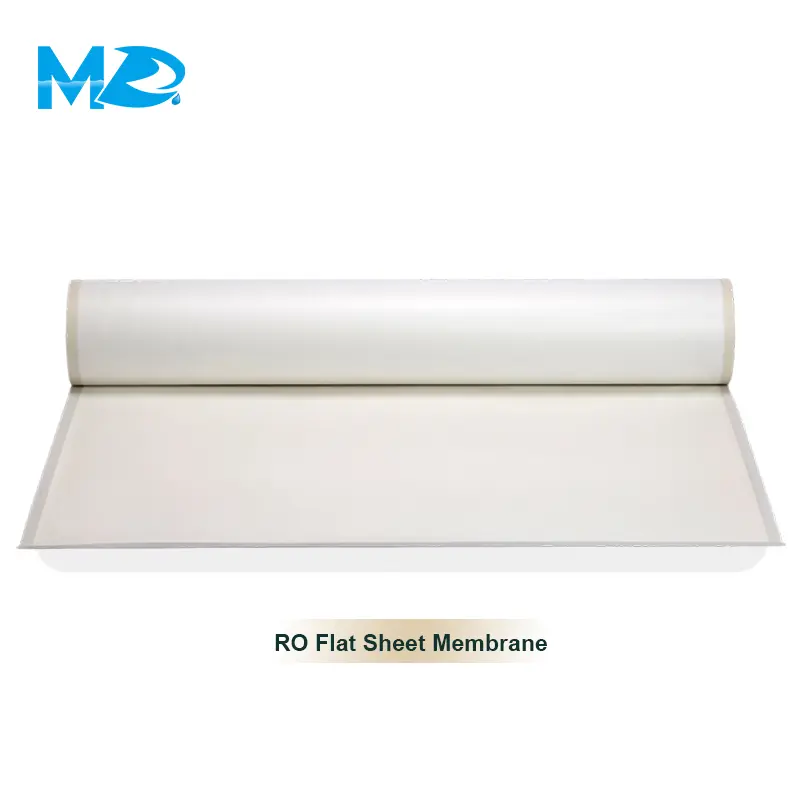
Understanding Flat Sheet Membrane Technology
Flat sheet membranes are thin, porous sheets typically composed of polymers or ceramics. They feature a dense barrier membrane supported by a porous substrate, which enhances mechanical strength and facilitates fluid flow. The membranes' selective permeability allows them to separate components based on size, charge, or other properties, making them ideal for filtration, purification, and separation processes.
Structure of Flat Sheet Membranes
The structure of flat sheet membranes consists of several layers meticulously engineered to achieve optimal filtration performance. At the core lies the selective barrier membrane, which determines the membrane's separation characteristics. This layer is often nanometers thick and selectively permits the passage of specific molecules or particles while blocking others. Surrounding the barrier membrane is a porous support substrate that provides structural integrity and enhances overall durability.
Functioning Principles
Flat sheet membranes operate on the principle of size exclusion, molecular sieving, or affinity-based interactions. Size exclusion membranes separate particles based on their size, allowing smaller molecules to pass through while retaining larger ones. Molecular sieving membranes have precise pore sizes that selectively filter molecules based on their molecular weight or size. Affinity-based membranes exploit chemical interactions to selectively capture specific molecules, such as proteins or contaminants, while allowing others to pass through.
Applications of Flat Sheet Membranes
The versatility of flat sheet membranes makes them indispensable across various industries. In water treatment, they play a crucial role in desalination, wastewater treatment, and potable water production. Flat sheet membranes are also widely used in the pharmaceutical and biotechnology sectors for protein purification, drug delivery, and cell separation. Additionally, they find applications in food and beverage processing, the dairy industry, chemical manufacturing, and environmental remediation.
Water Treatment
Flat sheet membranes have revolutionized water treatment processes, offering efficient solutions for purification and desalination. In reverse osmosis systems, these membranes effectively remove salts, contaminants, and microorganisms from seawater or brackish water, producing clean, potable water. Ultrafiltration membranes are utilized for wastewater treatment, removing suspended solids, bacteria, and viruses to meet stringent regulatory standards.
Biomedical Applications
The biomedical field extensively utilizes flat sheet membranes for various applications, ranging from drug delivery to tissue engineering. Membrane-based drug delivery systems enable controlled release of pharmaceutical compounds, enhancing therapeutic efficacy and reducing side effects. In tissue engineering, these membranes provide scaffolds for cell growth and organization, facilitating tissue regeneration and repair.
Food and Beverage Industry
In the food and beverage industry, flat sheet membranes play a pivotal role in processes such as clarification, concentration, and sterilization. Microfiltration membranes are employed for clarifying juices, wines, and dairy products by removing suspended particles and bacteria. Nanofiltration membranes enable selective separation of components in beverages, such as concentrating flavors or removing impurities. Additionally, membrane filtration techniques are used for sterilizing liquids without compromising their nutritional quality.
Chemical Manufacturing
Flat sheet membranes find extensive use in chemical manufacturing processes for separating and purifying chemical compounds. They are employed in solvent recovery, removing impurities from organic solvents to improve product quality and reduce environmental impact. Membrane filtration techniques also facilitate the separation of valuable products from reaction mixtures, contributing to process efficiency and resource conservation.
Environmental Remediation
In environmental remediation efforts, flat sheet membranes offer sustainable solutions for treating contaminated water and soil. Membrane-based technologies such as ultrafiltration and nanofiltration are utilized for removing pollutants, heavy metals, and organic compounds from industrial effluents. These membranes enable the recovery of clean water resources while minimizing the discharge of harmful substances into the environment.
Significance of Flat Sheet Membrane Technology
Flat sheet membrane technology holds immense significance in modern engineering and science due to its versatility, efficiency, and environmental sustainability. By enabling precise separation and purification processes, these membranes address critical challenges across various industries, including water scarcity, pollution, healthcare, and food security. Moreover, ongoing research and development efforts continue to expand the capabilities of flat sheet membranes, opening new possibilities for sustainable innovation and technological advancement.
Conclusion
In conclusion, flat sheet membrane technology represents a cornerstone of modern filtration and separation processes, offering unparalleled efficiency and versatility across diverse applications. From water treatment and biomedical research to food processing and environmental remediation, these membranes play a pivotal role in addressing pressing challenges and advancing scientific endeavors. As research and development in membrane technology continue to flourish, the future holds promising opportunities for further innovation and sustainable solutions.
Have questions about your specific water purification needs?
At Xi'an Membrane Desalination International Co., Ltd., we provide tailored membrane solutions for diverse applications. Whether you are selecting the right membrane or optimizing your filtration system, our technical team is here to help. Contact us at info@md-desalination.com to discuss your project or request free samples.
References
1. ScienceDirect. (2021). Flat Sheet Membrane Technology. https://www.sciencedirect.com/science/article/pii/S2666386421000223
2. National Center for Biotechnology Information. (2021). Applications of Flat Sheet Membranes. https://www.ncbi.nlm.nih.gov/pmc/articles/PMC7949973/
3. ScienceDirect. (2013). Membrane Filtration Processes. https://www.sciencedirect.com/science/article/pii/S0011916413004734