What is the composition of the RO membrane?
What Is the Composition of the RO Membrane?
Reverse Osmosis (RO) technology is widely used for water purification and is known for its ability to remove contaminants and produce safe drinking water. At the heart of this process is the RO membrane, a crucial component that determines the system's efficiency and performance. Understanding the composition of the RO membrane helps you select the right membrane and ensure optimal performance.
An RO membrane is primarily composed of several layers that work together to remove impurities from water. These layers typically include a polyamide thin-film composite (TFC) layer, a porous support layer (typically polysulfone or polyester), and a permeate spacer that provides structural support and channels the treated water. The polyamide TFC layer is the most critical component, responsible for rejecting contaminants and allowing only pure water to pass through. This layer is incredibly thin yet remarkably effective, removing contaminants down to the ionic and molecular level.
Xi'an Membrane Desalination International Co., Ltd. is a professional RO membrane manufacturer and supplier, supporting OEM and ODM services. If you are selecting an RO membrane, please contact us at info@md-desalination.com to request free samples and ensure you choose the best option for your needs.
What Are the Main Types of RO Membranes?
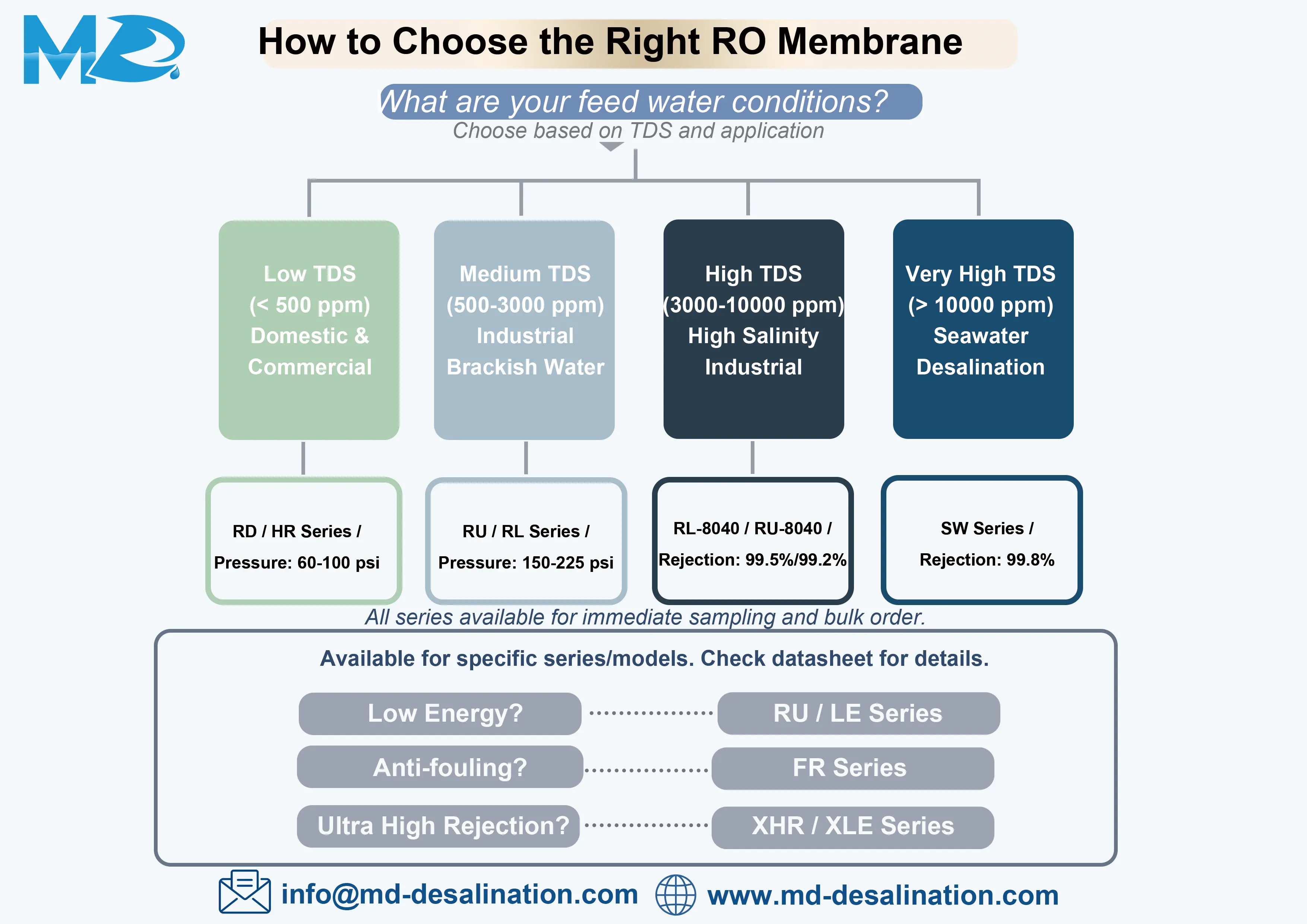
RO membranes are crucial components in various water purification processes, each designed to meet specific needs based on water quality, operating conditions, and desired outcomes. The main types include:
Cellulose Acetate (CA) Membranes: Cellulose acetate membranes were among the earliest materials used in RO technology. They are known for their tolerance to chlorine, making them suitable for municipal water treatment. However, they have lower salt rejection rates than newer membrane types.
Thin Film Composite (TFC) Membranes: TFC membranes are currently the most widely used in RO systems. They consist of a thin polyamide layer deposited on a porous support layer. This structure provides high salt rejection while maintaining high water flux. TFC membranes are suitable for both residential and industrial applications.
Polyamide TFC (PA-TFC) Membranes: PA-TFC membranes are a subtype of TFC membranes and are distinguished by their high rejection rates for salts and other contaminants. They are durable and offer high rejection of a wide range of dissolved substances.
Nanocomposite Membranes: Nanocomposite membranes integrate nanoparticles into the polyamide layer, enhancing selectivity and improving properties such as fouling resistance and permeability. These membranes are particularly useful under difficult feedwater conditions.
Hybrid Membranes: Hybrid membranes combine different materials or membrane types to achieve specific performance characteristics. For example, some hybrid membranes integrate nanotechnology with traditional polyamide layers to optimize performance under varying water conditions.
Chlorine-Resistant Membranes: These membranes are designed to withstand exposure to chlorine and chloramine, common disinfectants used in water treatment. They ensure long membrane life and consistent performance in environments with residual disinfectants.
Each type of RO membrane offers unique advantages depending on the intended application, water quality parameters, and operating considerations. Advances in membrane technology continue to drive improvements in efficiency, durability, and fouling resistance across diverse water purification processes, from household filtration systems to large-scale industrial applications.
How Long Do RO Membranes Last?
The lifespan of an RO membrane varies based on factors such as water quality, maintenance, and operating conditions. Typically, they last between 2 and 5 years. Regular maintenance and pre-treatment of feed water can help extend membrane life.
What Factors Affect RO Membrane Performance?
The performance of RO membranes is influenced by several key factors:
Feed Water Quality: The quality of the feed water entering the RO system significantly affects membrane performance. Factors such as total dissolved solids (TDS), hardness, turbidity, organic matter content, and microbiological contaminants can affect membrane fouling, scaling, and overall permeate quality.
Operating Pressure: An RO system requires a certain operating pressure to overcome osmotic pressure and facilitate water permeation through the membrane. Higher pressures generally result in higher water flux but also increase energy consumption. Optimal pressure levels are crucial to achieving the desired permeate flow and quality.
Temperature: Water temperature affects RO membrane performance by influencing water viscosity and the solubility of salts. Higher temperatures generally increase water flux but can also accelerate membrane fouling and biological growth if temperature is not properly controlled.
Pre-treatment: Effective pre-treatment of feed water is essential to protect RO membranes from fouling and scaling. Pre-treatment methods such as sediment filtration, activated carbon filtration, and antiscalant dosing help remove particulates, chlorine, and organic matter, and inhibit mineral scaling, thereby prolonging membrane life and maintaining performance.
Membrane Material and Design: The type of membrane material (e.g., cellulose acetate, thin film composite) and its structural design affect performance characteristics such as salt rejection, flux, and fouling resistance. Advances in membrane technology, including nanocomposite membranes and chlorine-resistant materials, enhance overall performance under various operating conditions.
System Configuration and Maintenance: Proper system design, including the arrangement of membranes in series or parallel, affects overall water treatment efficiency and membrane longevity. Regular maintenance practices such as membrane cleaning, seal replacement, and monitoring of operating parameters (pressure, flow rates, conductivity) are critical to sustained performance.
Feed Water pH: Feed water pH can influence membrane stability and permeate quality. Extreme pH conditions (high or low) may compromise membrane integrity and performance, leading to reduced efficiency and potential membrane damage over time.
Membrane Age and Condition: As RO membranes age, their performance may decline due to fouling, scaling, or mechanical damage. Regular performance testing and timely membrane replacement help ensure consistent water quality and operational efficiency.
Conclusion
In summary, the composition of the RO membrane plays a vital role in its performance and longevity. Understanding the layers and materials involved helps in selecting the right RO membrane for your specific application. Regular maintenance and proper care are essential to keep the system running efficiently.
Xi'an Membrane Desalination International Co., Ltd. is a professional RO membrane manufacturer and supplier, with large inventory, full certifications, fast delivery, secure packaging, and testing support. We also offer OEM and ODM services. If you are selecting a membrane, please contact us at info@md-desalination.com.
References
1.Water Quality Association. "Understanding Reverse Osmosis Membranes." Accessed October 20, 2026. https://www.wqa.org.
2.Journal of Membrane Science. "Reverse Osmosis Membranes and Their Applications." https://www.sciencedirect.com/journal/journal-of-membrane-science.
3.International Desalination Association. "RO Membrane Cleaning and Maintenance." Accessed October 20, 2026. https://idadesal.org.