How to Optimize Industrial RO Systems: Strategies for Energy Savings and Longer Membrane Life
Introduction
In today’s industrial landscape, water scarcity and stringent environmental regulations are forcing plant operators to rethink their water treatment strategies. Reverse Osmosis (RO) technology has become the gold standard for producing high-purity process water and treating industrial wastewater. However, operating an industrial RO system comes with significant challenges—specifically, high energy consumption and frequent membrane fouling.
For plant managers and engineers, optimizing RO system performance is no longer just about maintaining water quality; it is a critical factor in reducing operational costs and ensuring long-term sustainability. This article explores practical strategies for optimizing industrial RO systems, extending membrane lifespan, and maximizing return on investment.
The Core Challenges: Energy and Membrane Fouling
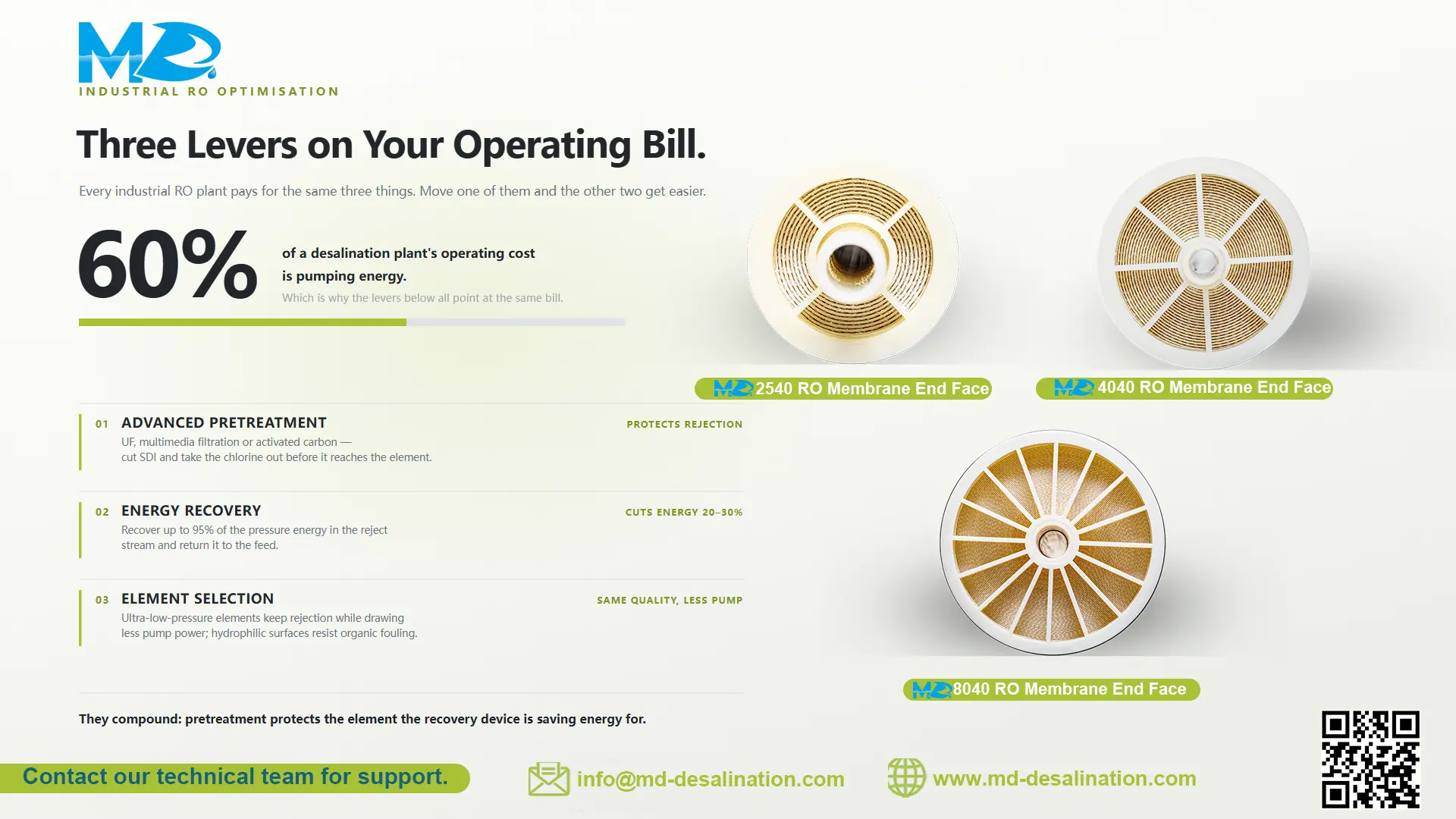
Industrial RO systems require substantial energy to pressurize feed water and overcome osmotic pressure. According to industry data, pumping energy can account for up to 60% of a desalination plant's total operating costs. Furthermore, industrial feed water often contains high levels of dissolved solids, organic matter, and scaling minerals. Without proper management, these contaminants rapidly foul or scale the RO membranes, leading to a drop in permeate flow, deteriorating water quality, and costly downtime for cleaning or replacement.
Strategies for Optimization
To combat these challenges, operators should focus on three key areas:
1. Advanced Pre-treatment: The most effective way to protect RO membranes is to stop contaminants before they reach the membrane. Implementing robust pre-treatment—such as ultrafiltration (UF), multimedia filtration, or activated carbon—drastically reduces the silt density index (SDI) and removes chlorine, which can degrade polyamide membranes.
2. Energy Recovery Devices (ERDs): In high-pressure applications like seawater desalination or high-salinity wastewater treatment, ERDs can recover up to 95% of the pressure energy from the concentrated reject stream and transfer it back to the feed water. This innovation can reduce overall energy consumption by 20% to 30%.
3. Selecting the Right Membrane Element: Not all membranes are created equal. Using an ultra-low-pressure (ULP) membrane can significantly reduce pump energy demands without sacrificing salt rejection rates. For challenging, high-fouling feed water, choosing a membrane with a specialized surface modification (like high hydrophilicity) ensures better resistance to organic and biological fouling.
The Importance of Membrane Quality
The performance of your RO system is ultimately dictated by the quality of the membrane element inside it. Low-quality membranes may offer a lower upfront cost, but they often suffer from rapid flux decline, structural compaction under high pressure, and poor chemical tolerance during Clean-In-Place (CIP) cycles. Investing in high-performance, rigorously tested TFC (Thin-Film Composite) membranes ensures consistent salt rejection and mechanical durability, even under harsh operating conditions.
Conclusion
Optimizing an industrial RO system is an ongoing process. By focusing on advanced pre-treatment, adopting energy recovery technologies, and selecting high-quality, application-specific membrane elements, industrial operators can achieve significant cost savings while maintaining a reliable water supply.
As the demand for sustainable water management continues to grow, choosing the right technology partner is more important than ever.
Partner with MD for High-Performance RO Solutions
At Xi'an Membrane Desalination International Co., Ltd. (MD), we understand the complexities of industrial water treatment. We specialize in manufacturing high-quality RO and NF (Nanofiltration) membrane elements designed for maximum efficiency, durability, and fouling resistance. With our ISO-certified production processes, rigorous testing, and comprehensive OEM services, we provide reliable solutions tailored to your specific operational needs.
Whether you are upgrading an existing plant or designing a new system, our technical team is ready to assist you.
Contact us today at info@md-desalination.com to request free samples, technical datasheets, or to discuss your custom OEM requirements. Let's build a more sustainable future together.
References
1. Water Quality Association. "Reverse Osmosis." https://www.wqa.org/learn-about-water/common-contaminants/contaminants-a-to-z/reverse-osmosis
2. U.S. Department of Energy. "Energy Recovery in Desalination." https://www.energy.gov/eere/amo/articles/energy-recovery-desalination
3. ScienceDirect. "Membrane Fouling in Reverse Osmosis: A Review." https://www.sciencedirect.com/topics/chemical-engineering/membrane-fouling