The Hidden Cost of Fouling: Why Membrane Selection Is Now an Energy Decision
Reverse osmosis has become the default technology for desalination, industrial reuse, and municipal wastewater recycling. More than 300 million people worldwide now rely on RO for their drinking water supply. Yet the operational economics of RO remain stubbornly unfavorable in one respect: 45–60% of a plant’s operating cost is still tied to energy consumption, and membrane fouling can reduce productivity by 15–40% while adding thousands of dollars annually in cleaning costs.
The industry’s response has been fragmented. Some manufacturers focus on higher permeability membranes. Others invest in pretreatment optimization. A few are rethinking the spacer geometry that has remained largely unchanged for decades. What is becoming clear in 2026 is that none of these approaches works in isolation. The plants achieving the most dramatic reductions in energy and cleaning costs are those where membrane design, element architecture, and monitoring strategy are treated as a single system rather than three separate procurement decisions.
The Spacer Problem That Nobody Wanted to Solve
Feed spacers account for less than 2% of an RO element’s material cost. Yet they exert disproportionate influence on how quickly a membrane fouls and how much pressure the high-pressure pump must overcome to maintain output.
Conventional mesh spacers create stagnant zones—dead spots where particles and biofilm accumulate and where cleaning chemicals struggle to penetrate. The result is predictable: differential pressure across the membrane vessel climbs, the pump works harder, and energy consumption rises. A pressure increase of just 5 bar can raise annual electricity costs by 6–10% in a large desalination facility operating continuously.
New 3D-printed spacer geometries are changing this calculus. Experimental data shows optimized designs deliver 19.8% higher membrane flux with only 8.9% additional pressure drop. More importantly for operators, permeability loss during silica fouling drops from 46% to 41%, and biofouling-related permeability decline falls from 33% to 22%. The practical outcome is that cleaning intervals extend from every 3–4 months to 6–12 months, depending on feedwater quality.
One industrial installation processing 3.5 million gallons per day reduced membrane cleanings by 83% after upgrading spacer technology. A university facility increased production from 54 to 72 gallons per minute—a 33% improvement—while operating for 12 months without cleaning.
Batch RO and the Pressure-Salinity Mismatch
Traditional RO applies constant pressure throughout the treatment cycle. But as salinity in the feed channel changes during operation, the optimal pressure changes with it. Operating at constant pressure means either over-pressurizing early in the cycle (wasting energy) or under-pressurizing later (sacrificing recovery).
Batch RO addresses this mismatch by adjusting pressure dynamically as salinity changes. Pilot-scale studies suggest the approach delivers 15–30% lower specific energy consumption, 10–20% higher water recovery, and 20–35% lower membrane fouling rates compared to conventional continuous operation. Concentrate volume requiring disposal drops by approximately 25%.
For a facility producing 50,000 m³/day, a 20% energy reduction translates to roughly 8–10 GWh of electricity saved annually. That is not a marginal improvement. It is the difference between a project that clears its hurdle rate and one that does not.
Predictive Monitoring Turns Fouling Into a Manageable Variable
The traditional approach to fouling is reactive: wait for performance to decline, then clean. The problem with this approach is that by the time normalized salt passage or differential pressure signals a problem, the fouling layer may already be resistant to standard cleaning protocols.
Modern RO plants collect thousands of operational data points every hour. The shift now underway is from scheduled cleaning to condition-based cleaning driven by normalized performance indicators. Detecting fouling just 7–10 days earlier can reduce chemical cleaning frequency by 30–50% and prevent irreversible membrane damage.
The specification implication is direct. A membrane that performs well under standard test conditions but fouls unpredictably in the field creates an operational burden that no cleaning protocol can fully offset. Asking suppliers for field-validated cleaning interval data—under feedwater chemistry comparable to your application—is no longer optional. It is the difference between a predictable maintenance budget and an escalating one.
What This Means for Procurement
The question is no longer whether a membrane is “fouling-resistant.” That term has become nearly meaningless through overuse. The relevant questions are more specific: which fouling mechanism does the element target, what field data supports the claim, and how does the element perform under the actual feedwater chemistry and operating profile of your system?
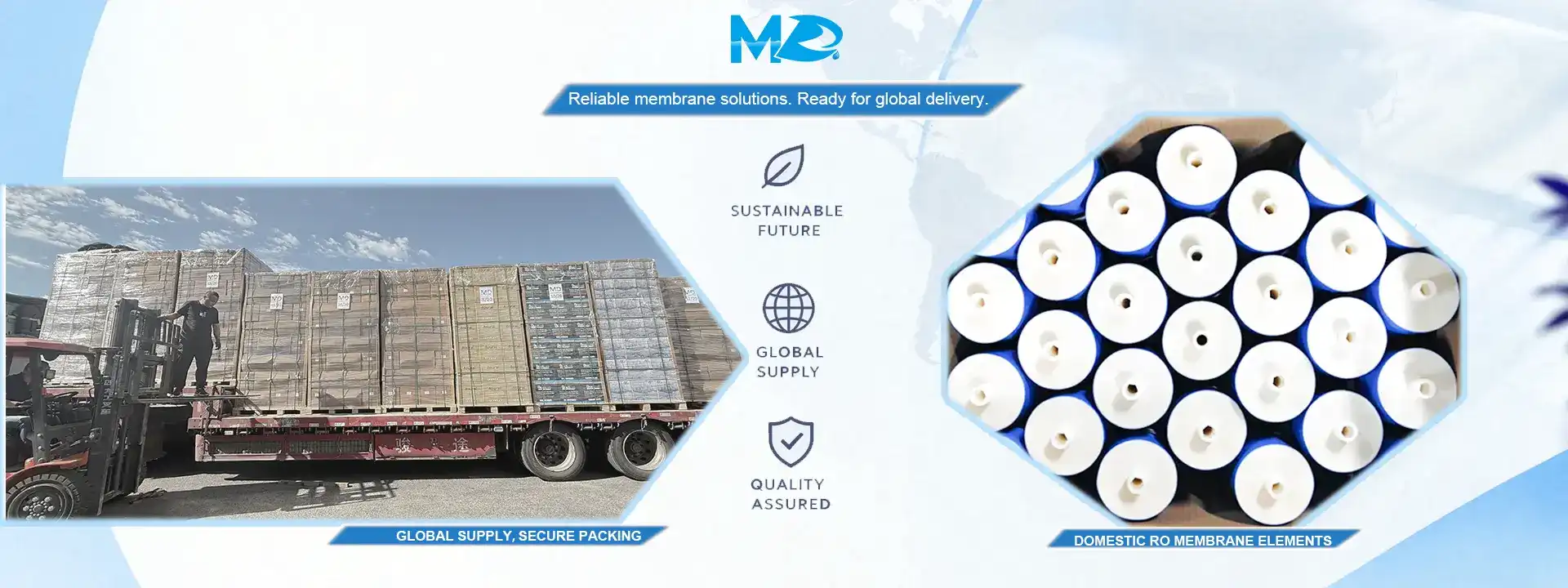
Xi’an Membrane Desalination International Co., LTD. supplies RO membrane elements for industrial and municipal applications, with OEM and ODM support and full testing capabilities. For application-specific membrane selection or sample requests, contact us at: