The Single-Pass Shift Reshaping RO Membrane Selection
The reverse osmosis membrane industry has spent years optimizing salt rejection by fractions of a percentage point. That incremental logic is now being disrupted by a more consequential question: whether the conventional two-pass architecture for seawater desalination can be eliminated altogether.
Toray’s TSW-K/M/V series, scheduled for commercial release in October, claims salt permeability up to 55% lower than its existing TM820M/TSW-M models. The implication is structural rather than marginal. New seawater desalination projects can potentially move from two-pass RO treatment to a single-pass process, removing an entire high-pressure stage from the system design.
For owners scoping new capacity, this changes the capital cost and energy consumption calculus. Single-pass configurations eliminate not only the second-stage membrane array and high-pressure pump, but also the associated piping, instrumentation, and maintenance labor. For operators of existing two-pass plants, the value proposition is different but equally relevant: higher-rejection first-pass elements reduce the salinity load on the second pass, allowing lower operating pressure or improved permeate quality without additional energy input.
Boron rejection is the second critical metric. The TSW series targets boron rejection performance designed to meet tightening drinking water and industrial standards, with Toray citing precision nanopore control and polyamide pore-size analysis as the enabling technologies. Enhanced chemical resistance also addresses a practical operational concern: membrane degradation during repeated cleaning cycles, which directly affects service life in plants with elevated cleaning frequencies.
The competitive landscape is responding. DuPont’s FilmTec Fortilife XC160UHP, a 2026 Edison Awards finalist, targets ultra-high-pressure concentration for industrial wastewater reuse rather than seawater desalination, but signals the same directional shift: membrane platforms are being engineered for specific process intensification outcomes rather than generic performance improvements. Meanwhile, Nitto and Hydranautics launched the PRO-XR1-X-LD fouling-resistant membrane in September, targeting industrial wastewater and recycling applications where cleaning frequency and flux recovery matter more than peak salt rejection.
What this means for specification is straightforward. Salt rejection and flux remain necessary parameters, but they are no longer sufficient. For seawater projects, the relevant questions are single-pass feasibility, boron rejection at system pH, and cleaning-cycle durability. For industrial reuse, the questions shift to fouling mechanism specificity and verified cleaning interval data under actual feed conditions.
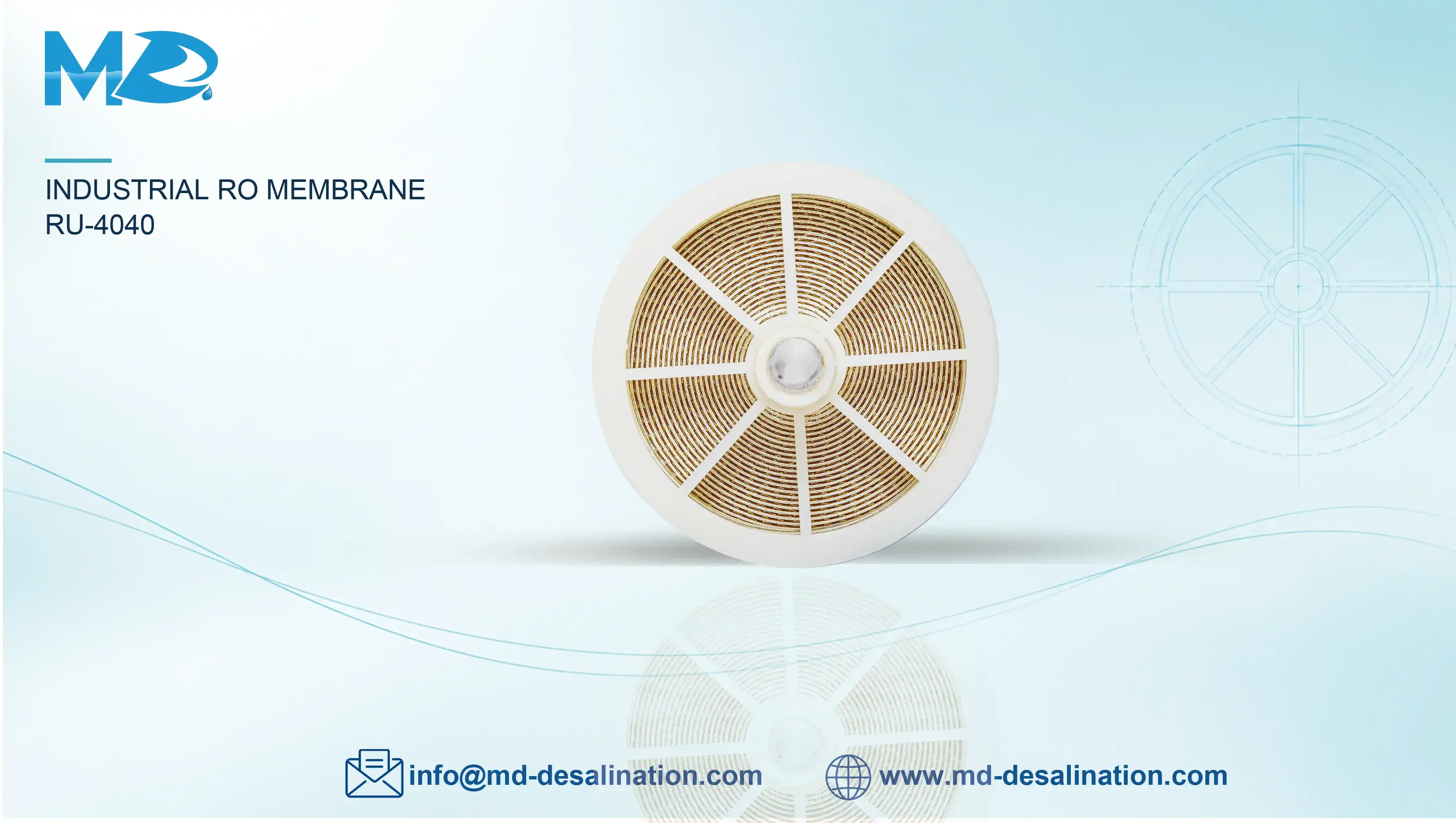
Xi’an Membrane Desalination International Co., LTD. supplies RO membrane elements for industrial and seawater applications, with OEM and ODM support and full testing capabilities. For application-specific membrane selection or sample requests, contact us at info@md-desalination.com or visit www.md-desalination.com.