what is reverse osmosis technology?
What Is Reverse Osmosis Technology?
Reverse osmosis technology, commonly abbreviated as RO, is a water purification method used to remove particles, molecules, and larger ions from water. It works by applying pressure to the water on one side of a semipermeable membrane, allowing pure water molecules to pass through while blocking contaminants. This technology has gained significant popularity due to its effectiveness in producing clean and safe drinking water.
Reverse osmosis (RO) technology is a water purification process that utilizes a semipermeable membrane to remove impurities from water.
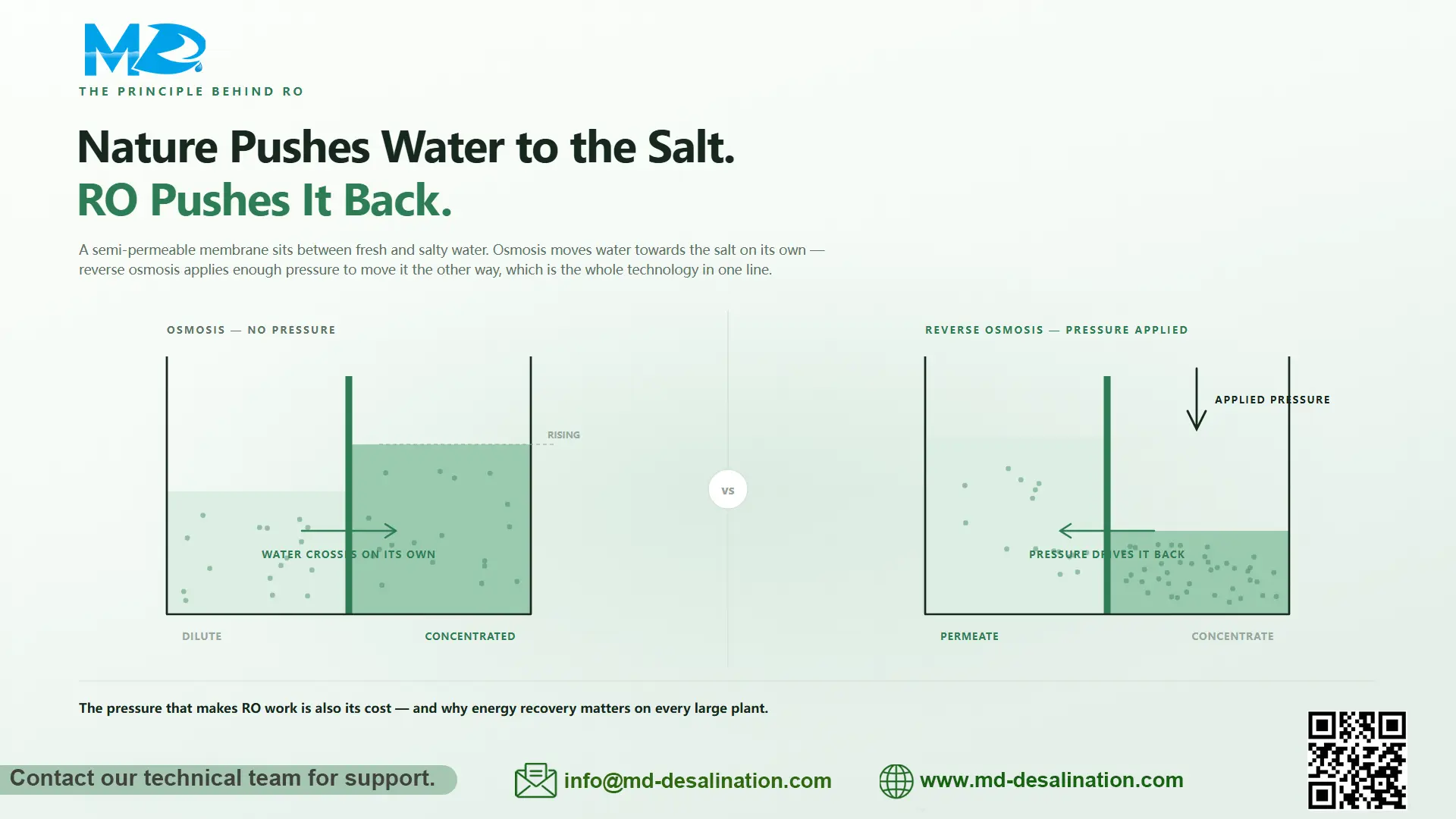
In osmosis, a solvent (usually water) naturally moves from an area of lower solute concentration to an area of higher solute concentration through a semipermeable membrane, to equalize the concentration on both sides. Reverse osmosis reverses this process by applying pressure to the side with the higher solute concentration, forcing water molecules through the membrane while leaving behind contaminants.
· Pre-Filtration: Water is first passed through pre-filters to remove larger particles, silt, and debris. This step helps protect the RO membrane from damage and clogging.
· Reverse Osmosis Membrane: The water is then pressurized and forced through a semipermeable membrane with tiny pores. These pores are small enough to block contaminants such as dissolved salts, minerals, heavy metals, bacteria, and viruses, while permitting pure water molecules to pass through.
· Separation: As the pressurized water passes through the membrane, it separates into two streams: permeate and concentrate. The permeate is the purified water that has passed through the membrane, while the concentrate contains the concentrated contaminants that were unable to pass through.
· Post-Treatment: The permeate may undergo further treatment to improve its taste, quality, and mineral content. This can include passing it through activated carbon filters or adding minerals back into the water.
· Disposal or Reuse: The concentrate, also known as brine or reject water, is typically discharged or reused back into the water treatment system to preserve water and minimize waste.
Reverse osmosis technology is widely used in residential, commercial, and industrial applications to deliver clean, purified water for drinking, cooking, manufacturing processes, and other uses. It is an effective method for removing a wide range of contaminants and producing high-quality water.
Understanding the Principles of Reverse Osmosis
At the heart of reverse osmosis technology lies the principle of osmosis, a natural process where solvent molecules move from an area of lower solute concentration to an area of higher solute concentration across a semipermeable membrane. Reverse osmosis reverses this natural flow by applying external pressure to the solution with higher solute concentration, forcing water molecules to move against the concentration gradient, leaving behind contaminants.
Components of Reverse Osmosis Systems
A typical reverse osmosis system comprises several key components working together to purify water. These include a pre-filter to remove sediment and larger particles, a pressurized pump to apply pressure to the water, a semipermeable membrane to separate contaminants, a post-filter to further polish the water, and a storage tank to hold the purified water for dispensing.
Applications of Reverse Osmosis Technology
Reverse osmosis technology finds applications in various industries and settings. It is commonly used in residential settings for drinking water purification, providing households with clean and safe water directly from the tap. Moreover, it plays a crucial role in commercial and industrial sectors such as food and beverage production, pharmaceuticals, seawater desalination, and wastewater treatment.
Advantages of Reverse Osmosis
One of the primary advantages of reverse osmosis technology is its ability to remove a wide range of contaminants from water, including dissolved salts, heavy metals, bacteria, and viruses. This makes it highly effective in producing high-quality drinking water that meets regulatory standards. Additionally, reverse osmosis systems are relatively easy to maintain and operate, requiring minimal upkeep compared to other water purification methods.
Environmental Impact of Reverse Osmosis
While reverse osmosis technology offers numerous benefits, it is essential to consider its environmental impact. The process requires significant energy input to operate the pressurized pump, which can contribute to carbon emissions and energy consumption. Additionally, the production of semipermeable membranes often involves the use of chemicals and generates waste. Proper disposal and recycling methods are crucial to mitigate the environmental footprint of reverse osmosis systems.
Limitations of Reverse Osmosis
Despite its effectiveness, reverse osmosis technology has certain limitations. One notable limitation is its inability to remove certain contaminants such as volatile organic compounds (VOCs) and certain pesticides, which may require additional treatment methods. Moreover, the process can result in a significant amount of wastewater, known as brine, which contains concentrated contaminants and requires proper disposal to prevent environmental harm.
Future Trends in Reverse Osmosis Technology
As technology continues to advance, ongoing research aims to improve the efficiency and sustainability of reverse osmosis systems. Innovations in membrane materials and design, as well as advancements in energy recovery systems, hold promise for reducing energy consumption and minimizing environmental impact. Additionally, the integration of smart monitoring and control systems allows for real-time optimization and performance tracking, ensuring optimal operation of reverse osmosis plants.
· Modular and Decentralized Systems: There is increasing interest in modular and decentralized RO systems, particularly in remote or off-grid locations where centralized water treatment infrastructure may be impractical or cost-prohibitive. Modular systems can be scaled to match specific water demand requirements and provide flexibility in deployment.
· Resource Recovery and Waste Reduction: Efforts are underway to explore resource recovery and waste minimization strategies in reverse osmosis processes. Technologies such as forward osmosis, membrane distillation, and electrochemical processes may be integrated with RO to recover valuable resources from concentrate streams and reduce brine discharge.
· Advanced Pretreatment Technologies: Advancements in pretreatment technologies are aimed at improving the efficiency and reliability of reverse osmosis systems. Enhanced pretreatment processes, including membrane filtration, oxidation, and advanced oxidation processes, help mitigate fouling, scaling, and membrane degradation, thereby extending system lifespan and reducing maintenance requirements.
Conclusion
Reverse osmosis technology stands as a cornerstone in the field of water purification, offering a reliable and efficient method for producing clean and safe drinking water. Its widespread applications across various industries underscore its importance in ensuring public health and environmental sustainability. While it has its limitations and environmental considerations, ongoing advancements continue to enhance its performance and mitigate its impact, paving the way for a brighter and more sustainable future.
Looking for high-quality RO membranes?
At Xi'an Membrane Desalination International Co., Ltd., we specialize in manufacturing reliable RO membranes for residential, commercial, and industrial applications. Contact us at info@md-desalination.com to request free samples or discuss your specific water treatment requirements.
References
1. Water Quality Association. "Reverse Osmosis." https://www.wqa.org/learn-about-water/common-contaminants/contaminants-a-to-z/reverse-osmosis
2. Centers for Disease Control and Prevention. "Home Water Treatment Systems." https://www.cdc.gov/healthywater/drinking/home-water-treatment/index.htm
3. U.S. Environmental Protection Agency. "Drinking Water Treatment Technology." https://www.epa.gov/ground-water-and-drinking-water