Why Antifouling Technology Reduces Industrial RO Costs
Introduction
In the industrial water treatment sector, the conversation around reverse osmosis (RO) membranes has historically focused on two metrics: salt rejection and permeate flow. While these factors remain critical, a silent challenge continues to erode the profitability of desalination plants and wastewater facilities worldwide: membrane fouling and scaling.
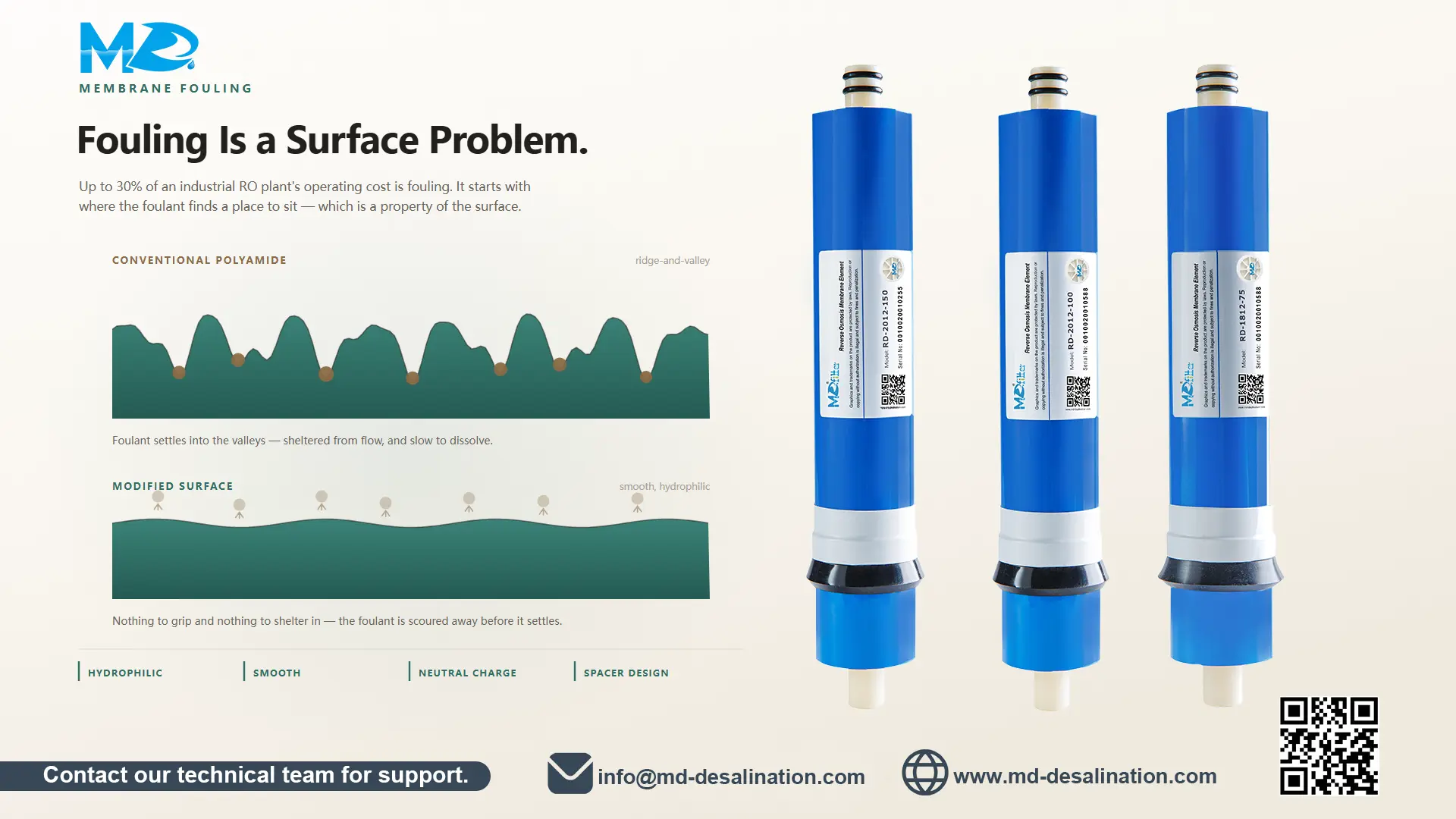
According to recent industry analyses, membrane fouling accounts for up to 30% of the total operating costs in a typical industrial RO system. It leads to increased pumping pressure, frequent chemical cleanings (CIP), and premature membrane replacement. In 2026, as industries push for zero-liquid-discharge (ZLD) and higher water recovery rates, specifying a membrane solely for its high flux is no longer enough. The new benchmark for high-performance RO membranes is long-term fouling resistance.
This article explores the mechanics of membrane fouling and how advanced, application-specific RO membrane technologies are helping plant operators reduce downtime and extend membrane life.
The Anatomy of Fouling and Scaling
To appreciate the value of fouling-resistant membranes, it is essential to understand how they fail. Fouling and scaling are distinct but often interconnected processes:
· Particulate Fouling: The accumulation of suspended solids, silt, and colloids on the membrane surface, blocking feed channels.
· Organic and Biofouling: The adhesion and multiplication of microorganisms (biofilm) or the buildup of organic matter (like algae or oils).
· Scaling: The precipitation of sparingly soluble salts (such as calcium carbonate, calcium sulfate, and silica) when their concentration exceeds the solubility limit during the concentration process.
When these occur, the RO system demands higher pressure to maintain the same water output, driving up energy consumption. Eventually, the membrane becomes irreversibly degraded, leading to a sudden drop in permeate quality and the need for costly replacements.
The Shift Toward Antifouling Membrane Technology
To combat these challenges, RO membrane manufacturers have moved beyond traditional polyamide chemistry. Today’s premium membranes feature advanced surface modifications:
1. Hydrophilic Surface Coatings: By making the membrane surface more hydrophilic (water-attracting), water passes through faster, while hydrophobic foulants (like oils and certain proteins) are repelled, preventing them from sticking to the surface.
2. Smooth Surface Topography: Traditional polyamide layers have a "ridge-and-valley" structure that traps contaminants. Advanced membranes utilize smoother surface morphologies, eliminating the "hiding spots" for bacteria and scaling minerals.
3. Neutral Surface Charge: Modifying the membrane to have a neutral or slightly negative surface charge reduces the electrostatic attraction of charged organic molecules and colloids.
4. Robust Spacer Design: Beyond the membrane itself, the feed spacer design is crucial. Innovative diamond-patterned or 3D-printed spacers improve turbulence at the membrane surface, scouring away potential foulants before they settle.
Economic and Operational Benefits
The shift toward advanced antifouling RO membranes delivers immediate and measurable ROI:
· Reduced Chemical Consumption: Longer intervals between clean-in-place (CIP) procedures mean less acid, caustic, and antiscalant consumption.
· Energy Savings: Maintaining a cleaner membrane surface means the high-pressure pump does not have to work as hard to overcome resistance, saving thousands of dollars in electricity annually.
· Extended Membrane Life: A membrane that resists fouling can easily outlast its standard 2-3 year lifespan, delaying capital expenditure for replacements.
· Higher Recovery Rates: Antifouling technology allows systems to operate closer to their physical limits, maximizing the amount of clean water extracted from every gallon of feed water.
Conclusion
In the pursuit of industrial sustainability and cost reduction, the choice of RO membrane is a strategic decision. Fouling and scaling are inevitable, but their impact on your bottom line is not. By selecting membranes engineered with antifouling technologies and smooth surface chemistry, plant operators can protect their equipment, reduce operational costs, and ensure a reliable supply of high-quality water.
As a leading manufacturer in the water treatment industry, Xi'an Membrane Desalination International Co., Ltd. (MD) is at the forefront of this technological shift. We engineer RO and NF membranes with advanced surface modifications to deliver superior fouling resistance and high flux stability across diverse industrial applications.
If you are looking to optimize your RO system's performance and reduce maintenance costs, our technical team is ready to assist you. Contact us at info@md-desalination.com to request product specifications, technical datasheets, or to discuss a custom OEM solution for your specific feed water chemistry.