Why is it so important to protect the RO membrane?
Why Is It So Important to Protect the RO Membrane?
In the realm of water purification technology, reverse osmosis (RO) stands as a dominant solution. RO membranes play a vital role in this process, ensuring that impurities are effectively removed, leaving behind clean and safe drinking water. The importance of protecting the RO membrane cannot be overstated; it is not only about maximizing equipment lifespan but also about maintaining water quality and safeguarding public health.
Protecting the RO membrane is critical for several reasons:
· Efficiency and Performance: The RO membrane is the heart of the reverse osmosis system, responsible for removing contaminants and producing clean water. Protecting the membrane ensures optimal performance and efficiency, maintaining high water quality and production rates.
· Cost Savings: RO membranes are expensive components of the system. Protecting them from damage or premature fouling helps avoid costly repairs or replacements, reducing operating costs and maximizing return on investment.
· Longevity: Proper maintenance and protection can extend the lifespan of RO membranes, allowing them to operate effectively for many years. This reduces the frequency of membrane replacements and related downtime, ensuring continuous operation of the water purification system.
· Water Quality Assurance: Protecting the RO membrane helps maintain the integrity of the water purification process, ensuring that the treated water meets quality standards and regulatory requirements. This is essential for safeguarding the health and well-being of consumers who rely on the filtered water for drinking, cooking, and other uses.
· Energy Efficiency: Fouling and damage to the RO membrane can increase energy consumption by requiring higher operating pressures or more frequent membrane cleaning. Protecting the membrane helps optimize energy efficiency, reducing the environmental footprint of the water treatment process.
· Reliability: A well-protected RO membrane contributes to the overall reliability and durability of the water purification system. By minimizing the risk of membrane fouling, scaling, or damage, system downtime and maintenance requirements are reduced, ensuring a dependable water supply and operational performance.
Overall, protecting the RO membrane is essential for maintaining the efficiency, productivity, and reliability of the reverse osmosis system, ultimately ensuring the production of clean, high-quality water for various applications.
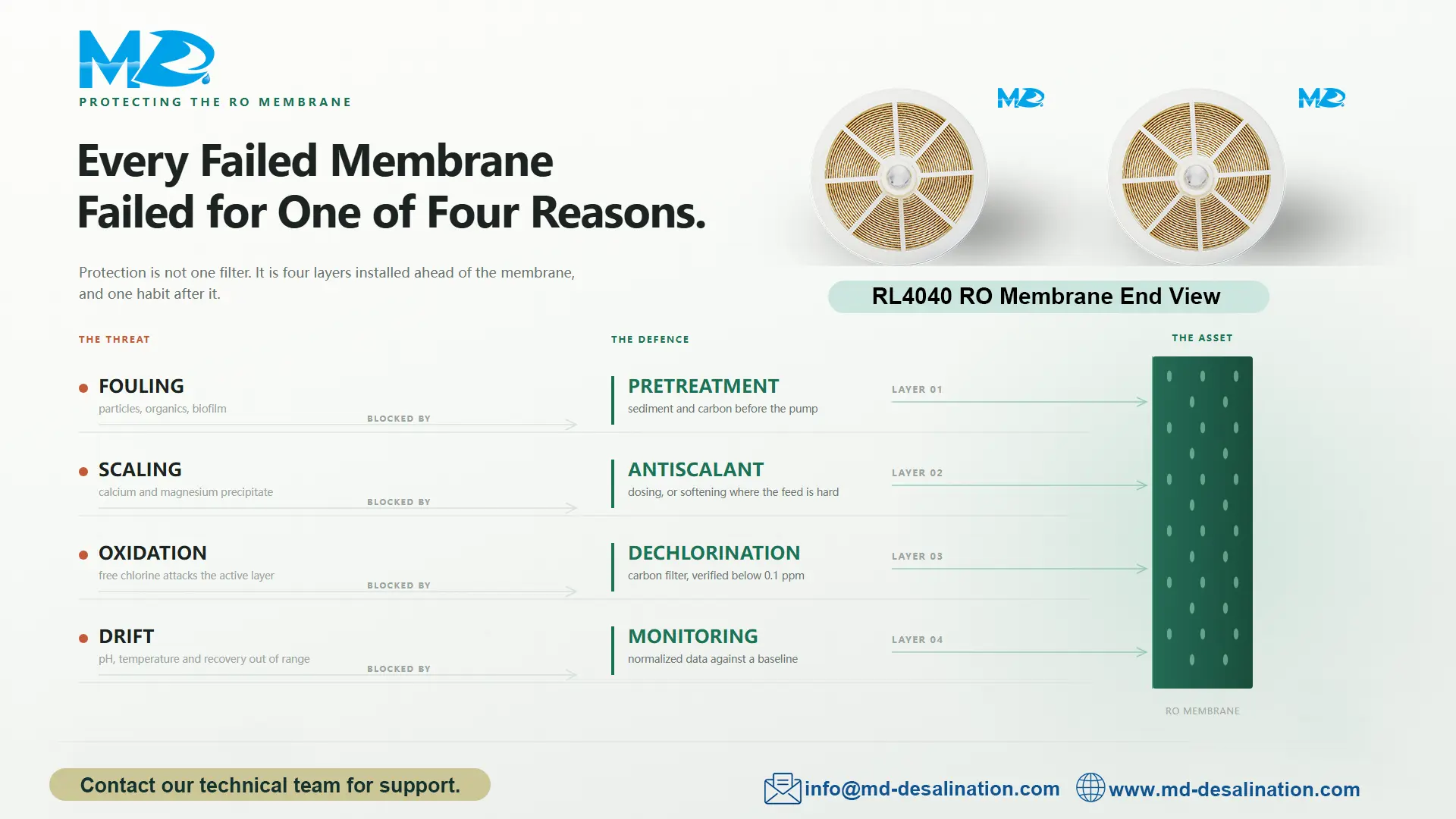
Understanding the Role of RO Membrane Protection
RO membranes act as a barrier, allowing only water molecules to pass through while trapping contaminants such as salts, minerals, and other impurities. This selective filtration process is vital for producing potable water from various sources, including seawater and brackish water. However, the effectiveness of RO membranes can be compromised by fouling, scaling, and other forms of degradation. Therefore, implementing measures to protect these membranes is imperative for ensuring the longevity and efficiency of RO systems.
Fouling: A Persistent Challenge
Fouling, a common issue in RO systems, occurs when suspended particles, microorganisms, or organic matter accumulate on the membrane surface. This buildup not only obstructs water flow but also reduces filtration effectiveness, leading to decreased water quality and system performance. Addressing fouling requires a multifaceted approach, including pre-treatment processes, regular maintenance, and proper cleaning protocols.
Preventive Measures: The First Line of Defense
Prevention is often the most effective strategy when it comes to protecting RO membranes. Pre-treatment methods such as sediment filtration, activated carbon filtration, and the use of antiscalants help remove suspended solids, chlorine, and other contaminants before they reach the RO membrane. By reducing the load on the membrane and minimizing the risk of fouling, these measures contribute to the overall efficiency and longevity of the system.
Antiscalants: Keeping Scale at Bay
Scaling, another common threat to RO membranes, occurs when minerals such as calcium and magnesium precipitate on the membrane surface, forming insoluble deposits. These deposits not only impede water flow but also create ideal conditions for bacterial growth, further exacerbating membrane fouling. Antiscalants play a crucial role in preventing scaling by inhibiting the formation of mineral deposits, thereby preserving the integrity of the RO membrane and ensuring consistent performance.
Regular Maintenance: A Proactive Approach
In addition to preventive measures, regular maintenance is essential for safeguarding RO membranes against degradation. Routine inspection, cleaning, and replacement of components such as filters, O-rings, and seals help detect and address issues before they escalate. By staying proactive and vigilant, operators can mitigate the risk of membrane fouling, scaling, and other forms of damage, thus maximizing the lifespan and efficiency of their RO systems.
Environmental Factors: The Hidden Variables
Environmental factors such as temperature, pH, and feed water quality can significantly influence the performance and longevity of RO membranes. Extreme temperatures, fluctuations in pH levels, and high levels of dissolved solids can accelerate membrane degradation and compromise filtration efficiency. Therefore, it is crucial to monitor these variables closely and implement appropriate measures to optimize system operation and protect RO membranes from potential harm.
Advanced Technologies: Pushing the Boundaries
Advancements in membrane technology and water treatment processes continue to drive innovation in the field of reverse osmosis. From novel membrane materials to sophisticated monitoring and control systems, these advancements offer new opportunities for enhancing membrane performance, reducing energy consumption, and improving overall system reliability. By embracing these technologies and adopting best practices in membrane protection, operators can stay ahead of the curve and ensure the long-term sustainability of their water treatment infrastructure.
Extending RO Membrane Lifespan
Several strategies can help extend the lifespan of RO membranes and optimize system performance. Using pre-filters and sediment cartridges can help reduce the load on the membranes by removing larger particles and contaminants before they reach the membrane surface. Additionally, installing a water softener can help minimize scaling and fouling caused by hard water minerals, further prolonging membrane lifespan.
Conclusion
In conclusion, protecting the RO membrane is paramount for maintaining the efficiency, reliability, and longevity of reverse osmosis systems. By implementing preventive measures, utilizing antiscalants, conducting regular maintenance, and monitoring environmental factors, operators can safeguard RO membranes against fouling, scaling, and other forms of degradation. Furthermore, embracing advancements in membrane technology and water treatment processes enables continuous improvement and innovation in the quest for clean and safe drinking water. Ultimately, investing in membrane protection not only preserves valuable resources but also upholds our commitment to public health and environmental stewardship.
Need professional advice on water treatment solutions?
Whether you are selecting the right membrane or optimizing your RO system, our technical team is here to help. Feel free to reach out to us at info@md-desalination.com for expert guidance and product inquiries.
References
1. Water Quality Association. "Reverse Osmosis." https://www.wqa.org/learn-about-water/common-contaminants/contaminants-a-to-z/reverse-osmosis
2. National Center for Biotechnology Information. https://www.ncbi.nlm.nih.gov/pmc/articles/PMC5418455/
3. WaterWorld. "What is Reverse Osmosis and How Does it Work?" https://www.waterworld.com/home/article/14071227/what-is-reverse-osmosis-and-how-does-it-work
4. ScienceDirect. https://www.sciencedirect.com/science/article/pii/S0021979719303076
5. Lenntech. "What is Reverse Osmosis?" https://www.lenntech.com/processes/reverse-osmosis/what-is-reverse-osmosis.htm