Why Ultrapure Water Systems Are Shifting Toward Application-Specific RO Membranes
Introduction
In 2026, the demand for ultrapure water (UPW) is accelerating across industries that cannot tolerate even trace levels of contamination. From semiconductor fabrication to pharmaceutical manufacturing, the margin for error has narrowed to parts-per-trillion (ppt) levels. While electrodeionization (EDI) and polishing resins have traditionally shouldered the burden of final purification, the reverse osmosis (RO) membrane at the front end of these systems is increasingly recognized as a critical determinant of total cost of ownership.
As water quality regulations tighten and industrial facilities pursue zero-liquid-discharge (ZLD) targets, specifying a generic RO membrane is no longer sufficient. The shift is toward application-specific RO membranes engineered for the exact chemistry of the feed water and the purity demands of the downstream process.
The Hidden Cost of Generic Membranes
A common assumption in UPW system design is that any high-rejection RO membrane will perform similarly, with downstream EDI and polishing loops compensating for any deficiencies. In practice, this approach often leads to higher operating costs.
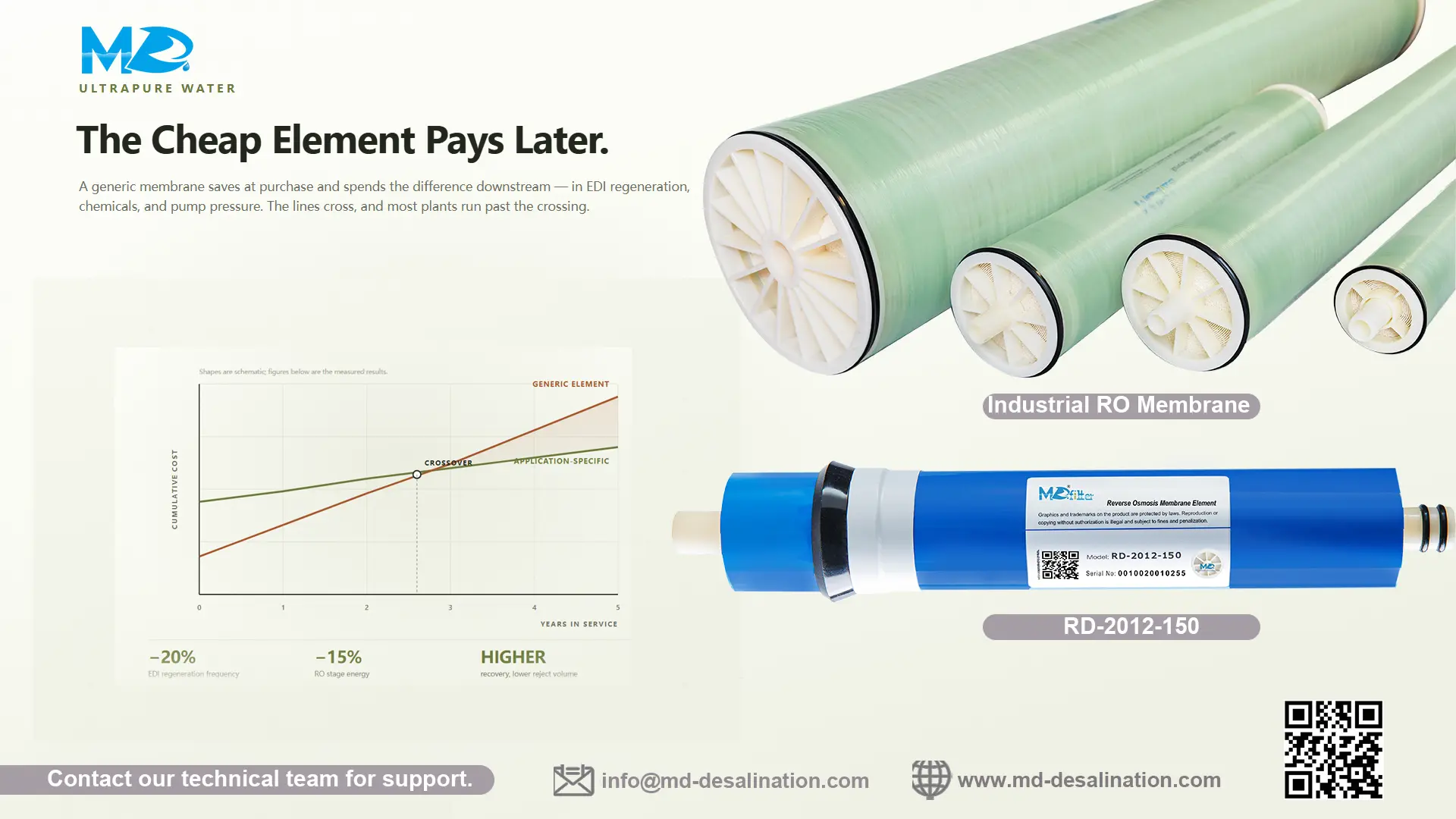
When a membrane with suboptimal rejection of specific ions—such as boron, silica, or trace organics—is deployed, the downstream polishing systems must work harder. This translates directly into higher chemical consumption, more frequent resin regeneration, and increased energy use from pump pressure. Over a five-year lifecycle, the cost of these downstream penalties frequently exceeds the initial savings from selecting a lower-cost membrane.
Additionally, generic membranes may not be optimized for the specific pretreatment configurations common in ultrapure water systems. For example, a membrane designed for high-fouling municipal wastewater may not achieve the precise selectivity required for semiconductor-grade water, where trace metal rejection is paramount.
Key Performance Metrics for UPW Applications
When selecting an RO membrane for ultrapure water production, engineers should prioritize performance metrics that align with the downstream purification strategy:
· Boron and Silica Rejection: In semiconductor manufacturing, boron and silica can cause defects in wafer fabrication. Membranes with enhanced rejection of these specific species reduce the load on downstream ion exchange and polishing steps.
· TOC (Total Organic Carbon) Reduction: Organic compounds can foul EDI stacks and compromise water quality. RO membranes with high TOC rejection protect downstream components and extend their service life.
· Consistent Flux Stability: UPW systems operate continuously. Membranes that maintain stable flux over thousands of hours without significant decline reduce the need for frequent cleaning and replacement.
· Chlorine Tolerance: Many pretreatment strategies rely on chlorination to control biological growth. Membranes that tolerate residual chlorine—or are protected by robust dechlorination systems—reduce the risk of membrane degradation.
Case Study: Optimizing RO for Semiconductor-Grade Water
A semiconductor fabrication plant in East Asia recently upgraded its UPW system by replacing generic RO membranes with application-specific TFC membranes optimized for boron and silica rejection. The results were measurable:
· Downstream EDI Load Reduced: The frequency of EDI stack regeneration decreased by 20%, reducing chemical consumption and operator intervention.
· Energy Savings: Lower required pressure from the RO pump translated into a 15% reduction in energy consumption for the RO stage.
· Water Recovery Improvement: Enhanced fouling resistance allowed the system to operate at a higher recovery rate, reducing wastewater generation.
While the initial cost of the specialized membranes was higher than the generic alternative, the total cost of ownership over a 3-year period was significantly lower due to reduced chemical, energy, and maintenance expenses.
The Future of RO Membranes in UPW Systems
As ultrapure water requirements become more stringent—particularly with the growth of advanced semiconductor nodes and biologics manufacturing—the RO membrane will continue to evolve from a bulk contaminant barrier to a precision separation tool. Emerging technologies, such as membranes with tailored surface chemistry and nanocomposite active layers, promise even greater selectivity and fouling resistance.
For engineers and procurement teams, the key takeaway is clear: the RO membrane should be selected based on the specific contaminants that matter most to the downstream process, not solely on generic rejection metrics. Partnering with a membrane manufacturer that understands the nuances of ultrapure water applications can yield significant long-term savings and operational reliability.
Conclusion
The shift toward application-specific RO membranes in ultrapure water systems reflects a broader trend in industrial water treatment: precision over generalization. As regulatory and quality demands increase, selecting the right membrane for the specific chemistry of your feed water and the purity requirements of your process is no longer optional—it is essential.
At Xi’an Membrane Desalination International Co., Ltd. (MD), we manufacture high-performance RO and NF membrane elements for demanding industrial applications, including ultrapure water production. Our technical team works with system designers to match membrane specifications to feed water chemistry and downstream process requirements. Contact us at info@md-desalination.com to discuss your project requirements or request product samples.
References
1. Water Quality Association. “Ultrapure Water for Semiconductor Manufacturing.”
2. U.S. Environmental Protection Agency. “Drinking Water Treatment Technology.” https://www.epa.gov/ground-water-and-drinking-water
3. ScienceDirect. “Advances in Reverse Osmosis Membranes for Ultrapure Water Production.”